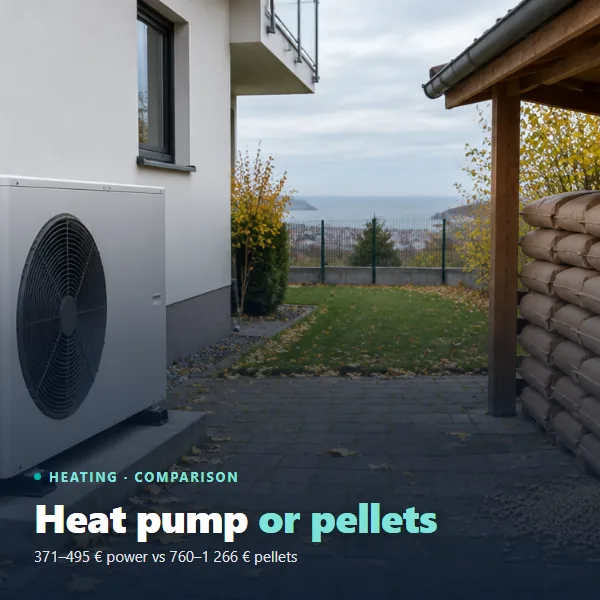
Short answer: at 0.15 €/kWh an air-to-water heat pump costs less to run than a pellet boiler if a tonne of pellets costs more than 195 € with radiators, or more than 147 € with underfloor heating. For an insulated 120 m² house in Varna that means about 371–495 € of electricity per season against 760–1 266 € of pellets at 300 to 500 € a tonne. Pellets come out ahead with expensive electricity or old cast-iron radiators, and a boiler that is already installed tips the sums their way.
The question „heat pump or pellets“ usually comes up in two situations. You are building a new house and choosing a system from scratch. Or you already have a pellet boiler, you are tired of carrying bags and cleaning out ash, and you wonder whether switching is worth it. The figures below apply to both. The difference is that with a boiler in place you are not paying for a new system.
How the two bills compare
Both systems do the same job: they heat the water in the radiators or the underfloor loops. So we compare them by the price of one kilowatt-hour of heat that reaches the house.
Heat pump: electricity price ÷ SCOP. At 0.15 €/kWh and SCOP 3.0 (radiators at 55 °C), one kilowatt-hour of heat costs 0.05 €. At SCOP 4.0 (underfloor heating) it costs about 0.038 €.
Pellets: price per kilogram ÷ useful heat per kilogram. The EN ISO 17225-2 standard requires class A1 pellets to deliver at least 16.5 MJ/kg, which is about 4.6 kWh/kg. The boiler loses part of that up the flue. We assume 85 % efficiency, so about 3.9 kWh per kilogram stays in the house. At 300 € a tonne a kilowatt-hour of heat costs about 0.077 €, at 400 € about 0.10 €.
Pellet prices change every season and depend on the supplier, so the tables below show three levels: 300, 400 and 500 € a tonne. Put the price you are quoted this autumn next to them.
The seasonal bill: insulated and old house
We calculate the heat demand the same way as in our article on heat pump running costs: the building’s heat loss times 1 500 full-load hours, the benchmark for Varna and the Black Sea coast. The figures cover energy only, without maintenance or the price of the system itself.

| 120 m² house | Heat per season | Heat pump, underfloor (SCOP 4.0) | Heat pump, radiators (SCOP 3.0) | Pellets 300 €/t | Pellets 400 €/t | Pellets 500 €/t |
|---|---|---|---|---|---|---|
| Insulated, 55 W/m² | 9 900 kWh | 371 € | 495 € | 760 € (2.5 t) | 1 013 € | 1 266 € |
| Unrenovated, 100 W/m² | 18 000 kWh | 675 € | 900 € | 1 381 € (4.6 t) | 1 841 € | 2 302 € |
At these prices the heat pump saves from 265 € (insulated house, radiators, pellets at 300 €) to 1 627 € per season (unrenovated house, underfloor, pellets at 500 €). In the old house the gap in euros grows because it needs more heat.
When pellets come out cheaper
The break-even point depends on two things: the electricity price and the heat pump’s SCOP. At these pellet prices per tonne the two systems cost the same:
| Electricity price | Underfloor, SCOP 4.0 | Radiators, SCOP 3.0 |
|---|---|---|
| 0.15 €/kWh | 147 €/t | 195 €/t |
| 0.25 €/kWh | 244 €/t | 326 €/t |
Below that price pellets win on energy. That usually happens when:
- Your electricity costs more than 0.15 €/kWh, for example on a business contract or a higher tariff.
- The house has old cast-iron radiators that need water at 65–70 °C. The real SCOP then drops below 3.0 and the break-even pellet price goes up.
Radiators have their own guide: heat pump heating with radiators. It explains which radiators work with a low-temperature heat pump and when you need a medium- or high-temperature model.
What the fuel bill leaves out
Pellets first. 2.5 tonnes are about 170 bags of 15 kg, and 4.6 tonnes are about 310. At a bulk density of about 600 kg/m³ that is 4–8 m³ of dry space in a basement or shed. Someone has to fill the hopper and clean the ash and the burner, and the boiler needs a chimney that also has to be swept.
The heat pump has no fuel and no ash. The outdoor unit needs space next to the house and free air around it. In winter it defrosts from time to time and water runs out of it, which is normal (details in the article on defrosting). Units above about 12 kW are usually three-phase, so check the power supply at the property.
A pellet boiler only heats. A heat pump with fan coils can also cool in summer, and models with DHW also make hot water for the bathroom.
System price and installation
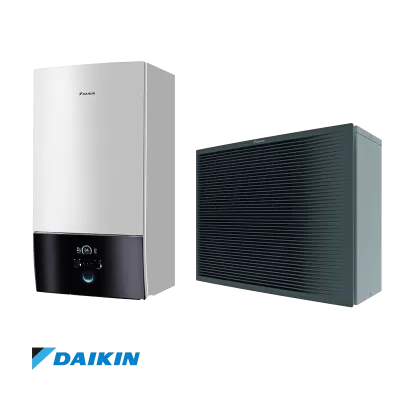
Air-to-water heat pumps in stock in our catalogue start from 3 196 € for the equipment. We have set out prices by capacity and floor area in the article how much a heat pump for a house costs, and the full range is in the heat pumps category.
We do not publish an installation price because it depends on the distance to the boiler room, the condition of the system and whether a boiler is being replaced. We quote after a site visit, and the scope of the work is described on the page for heat pump installation in Varna.
We do not give pellet boiler prices because we do not sell them. If you are comparing for a new house, get a quote for the boiler, hopper and chimney and put it next to the price of the heat pump and its installation.
Heat pump and pellet boiler together
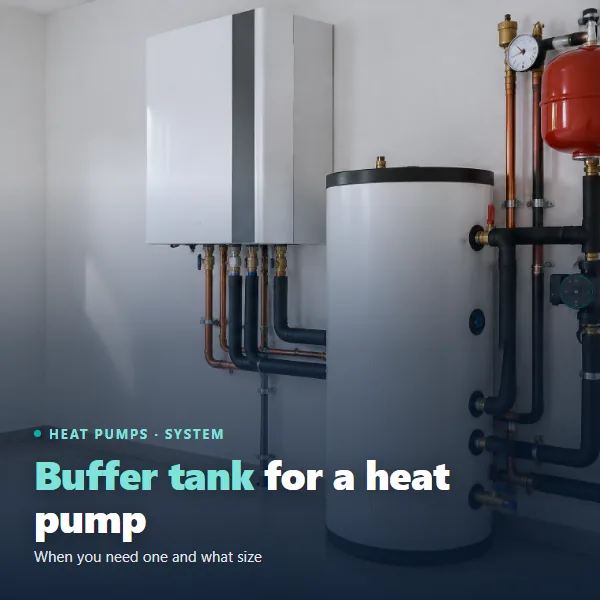
If the boiler is already working, you do not have to remove it. The heat pump can cover most of the season while the boiler stays for the coldest days or as a backup. Both connect to the same water system, usually through a buffer tank.
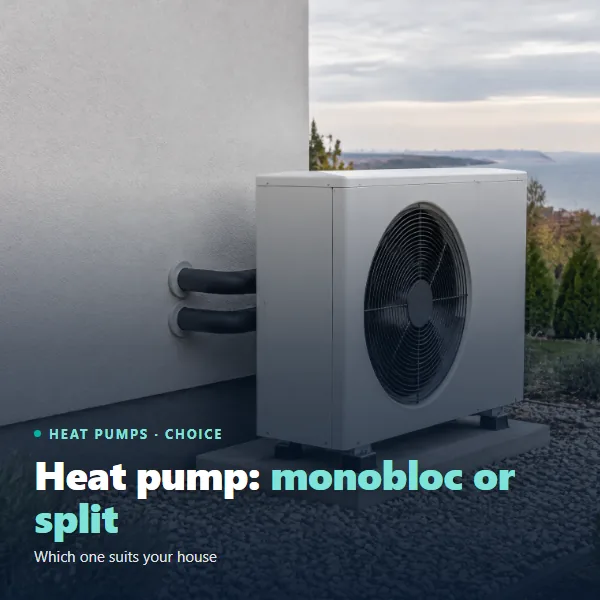
The heat pump’s share depends on its capacity relative to the house’s heat loss. We work out the layout and the capacity on site, after inspecting the boiler room. The distance between the boiler room and the spot for the outdoor unit also decides whether it should be a monobloc or a split.
How to decide for yourself
- Take the price per kWh from your electricity bills and ask this autumn what a tonne of pellets costs.
- Note what heating you have: underfloor, new aluminium radiators or old cast-iron ones.
- Compare the price per tonne with the break-even table above.
- Add the time and space that pellets take, and whether you want cooling and hot water from the same system.
Frequently asked questions
Which is cheaper for heating: a heat pump or pellets?
At 0.15 €/kWh the heat pump is cheaper if a tonne of pellets costs more than 195 € with radiators and more than 147 € with underfloor heating. For an insulated 120 m² house that is 371–495 € of electricity against 760–1 266 € of pellets at 300–500 € a tonne.
How many pellets does a 120 m² house need?
With good insulation about 2.5 tonnes per season, in an old unrenovated house about 4.6 tonnes. The calculation is for Varna (1 500 full-load hours), A1 pellets at 4.6 kWh/kg and a boiler with 85 % efficiency.
Can a heat pump and a pellet boiler work together?
Yes. Both connect to one water system, usually through a buffer tank. The heat pump heats for most of the season and the boiler stays for the coldest days or as a backup.
Is a heat pump worth it with old radiators?
With cast-iron radiators that need 65–70 °C, SCOP drops below 3.0 and the advantage over pellets shrinks. In that case you choose a medium- or high-temperature heat pump, and with expensive electricity and cheap pellets the boiler can come out cheaper.
How much does a heat pump for a house cost?
Air-to-water heat pumps in stock start from 3 196 € for the equipment. Installation is quoted separately, after a site visit.