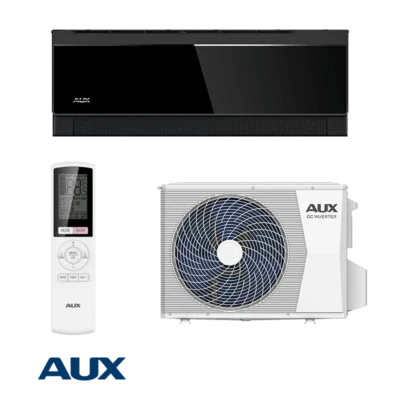
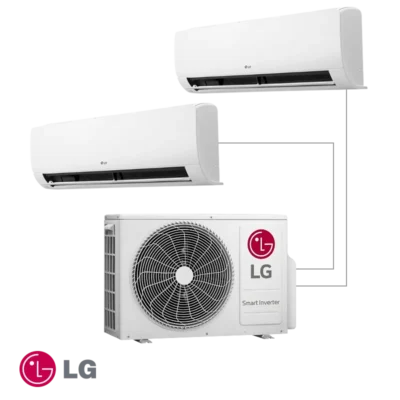
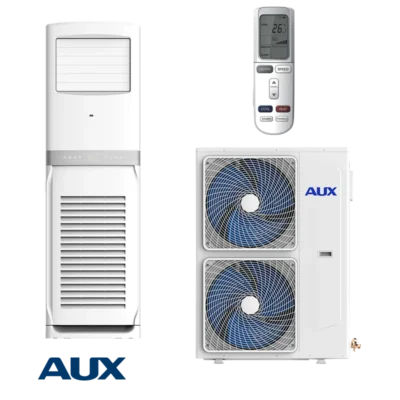
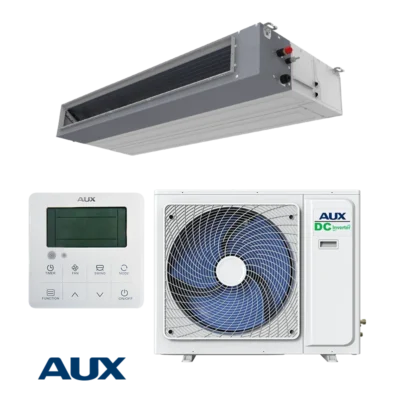
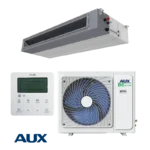
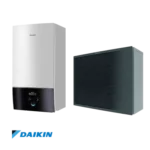
An “economical electric heater” doesn’t exist. That’s not an opinion, it’s physics: every appliance that converts electricity directly into heat — convector, oil-filled radiator, infrared panel, ceramic heater, electric underfloor heating, electric boiler — delivers exactly 1 kWh of heat from 1 kWh of electricity. None of them can do more. So there’s no economical or uneconomical one among them: they all cost the same to run.
There is, however, one appliance that breaks this rule — it doesn’t turn electricity into heat but moves heat from outside to inside. At Svit Komfortu, we install these units in Varna every season, and below we’ve calculated the difference using real prices from our catalog and real electricity rates.
Contents
- Why all electric heaters cost the same to run
- Which is more economical: air conditioner or convector
- The bill for a whole season: 7 ways to heat with electricity
- What it costs to get started: models and real running costs
- How quickly an air conditioner pays for itself
- Where SCOP misleads — an honest reading
- 5 conditions without which the savings won’t happen
- When an air conditioner isn’t the cheapest option
- Frequently asked questions
Why all electric heaters cost the same to run
Electric convectors, oil-filled radiators, infrared panels and “economical” ceramic heaters all work on the same principle: they pass current through a resistance and it heats up. The law of conservation of energy doesn’t allow more heat to come out of this process than the electricity put in. The conversion coefficient is 1,0 — for a €40 unit and a €400 unit alike.
That’s why ads for “economical electric heating” with such appliances are really talking about something else: faster warm-up, residual heat after switching off, a thermostat, a feeling of comfort. All of that is real. But the electricity bill doesn’t change — with the same room heat losses, it depends only on how many kilowatt-hours of heat are needed, not on which appliance produces them.
The indicator that shows the difference
SCOP (Seasonal Coefficient of Performance) is the seasonal conversion coefficient: how many kWh of heat the unit delivers for every kWh of electricity used over the entire heating season, including all on and off hours. A SCOP of 4.6 means 4.6 kWh of heat from 1 kWh of electricity.
Be careful not to look at SEER — it describes cooling and has nothing to do with your winter bill. The same goes for the energy class: it’s written with two ratings, for example “A+++ / A++”, and the second one is the heating class. A detailed ranking of models by this indicator is in the article best air conditioners for heating.
Which is more economical: air conditioner or convector
This is the most frequently asked question in November, and the answer is clear-cut: the air conditioner, using 4 to 5 times less electricity for the same heat. Here’s the calculation for a typical living room in Varna.
Input data: a 25 m² room, a panel-block apartment with replaced windows, heating season October–April. The seasonal heat demand for such a room is about 2 500 kWh. Electricity price — 0,15 €/kWh.
| Appliance | Coefficient | Electricity per season | Bill per season |
|---|---|---|---|
| Electric convector | 1,0 | 2 500 kWh | 375 € |
| Air conditioner SCOP 4.0 (basic inverter) | 4,0 | 625 kWh | 94 € |
| Air conditioner SCOP 4.6 (NORDIC series) | 4,6 | 543 kWh | 82 € |
| Air conditioner SCOP 5.2 (premium, class A+++/A+++) | 5,2 | 481 kWh | 72 € |
The difference between a convector and the most affordable inverter air conditioner is €281 in a single season. Between a convector and a premium model — 303 €. Note: the difference between the cheapest and the most expensive air conditioner is only €22 per season, while the difference compared with a convector is over €280. The decisive step is the switch to the heat pump principle itself, not the choice of an expensive model.
What about a whole apartment?
For a 70 m² home heated entirely, the demand is about 7 000 kWh per season:
- Convectors in every room: 7 000 kWh = €1 050 per season
- Multi-split system SCOP 4.6: 1 522 kWh = €228 per season
- Difference: about €820 every winter
At this scale, a multi-split system with one outdoor unit and three or four indoor units is a more logical solution than separate air conditioners — one outdoor unit, one line run, one installation.
The bill for a whole season: 7 ways to heat with electricity
The full picture for the same 25 m² room and the same 2 500 kWh heat demand. All appliances in the upper part of the table are physically identical in consumption — they differ only in purchase price and comfort.
| Heating method | Coefficient | Bill per season | Note |
|---|---|---|---|
| Electric boiler + radiators | ≈ 0,95 | ≈ 395 € | Some heat is lost in the pipes |
| Electric convector | 1,0 | 375 € | Cheapest to buy, most expensive to run |
| Oil-filled radiator | 1,0 | 375 € | Slow warm-up, residual heat after switching off |
| Infrared panel | 1,0 | 375 € | Heats objects, not air — comfort, not savings |
| Ceramic / “economical” heater | 1,0 | 375 € | The marketing promises savings, physics doesn’t |
| Air conditioner (inverter) | 4,0 – 5,2 | 72 – 94 € | The only one with a coefficient above 1 |
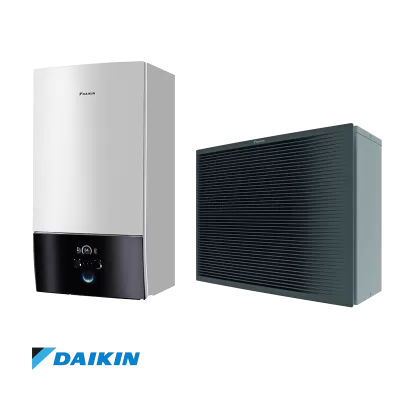
| Air-to-water heat pump | 4,5 – 5,2 | 72 – 83 € | For a whole house with radiators or hydronic underfloor heating |
The table also answers why electric cable underfloor heating, however convenient, doesn’t fall into the “economical” category — it’s also a resistance heater and also works with a coefficient of 1.0. If the goal is a low bill rather than a warm floor, the same money spent on electricity gives 4 times more heat through an air conditioner.
If you already use an air conditioner and want to calculate your specific case by capacity and operating hours, see how much electricity an air conditioner uses — there, consumption is broken down by BTU and by mode.
What it costs to get started: models and real running costs
The prices and technical data below are from the Svit Komfortu catalog as of August 10, 2026, and refer to models in stock. The seasonal bill is calculated for a 25 m² room with a 2 500 kWh heat demand at €0.15/kWh.
The cheapest entry into economical heating
| Model | BTU | SCOP | Works down to | Price | Bill/season |
|---|---|---|---|---|---|
| TechPoint TCP H09 MAXCOOL | 9 000 | 4,0 | −15 °C | 300 € | 94 € |
| TechPoint TCP H12 MAXCOOL | 12 000 | 4,0 | −15 °C | 315 € | 94 € |
| TechPoint NPT 09 X-PRO NORDIC | 9 000 | 4,0 | −20 °C | 325 € | 94 € |
| TechPoint TCP H18 MAXCOOL | 18 000 | 4,0 | −15 °C | 540 € | for a larger area |
A €300 model already delivers fourfold savings compared with a convector. This matters because people often put off buying with the argument that “an economical air conditioner is expensive” — it isn’t. The premium series are expensive, but the savings already come with the basic inverter model.
Best value / efficiency ratio
| Model | BTU | SCOP | Class (cool./heat.) | Works down to | Price |
|---|---|---|---|---|---|
| Nippon NPC 09 T-PRO NORDIC | 9 000 | 4,6 | A+++ / A++ | −25 °C | 451 € |
| Nippon KFR 09 GLORY PRO | 9 000 | 4,6 | A+++ / A++ | −25 °C | 485 € |
| Nippon NPC 12 T-PRO NORDIC | 12 000 | 4,7 | A+++ / A++ | −25 °C | 499 € |
| Gree Clivia GWH09AUCXB | 9 000 | 4,6 | A++ / A+ | −25 °C | 630 € |
| AUX C-PRO ASW-H09B6A4 | 9 000 | 4,7 | A+++ / A++ | −25 °C | 656 € |
Maximum efficiency if the air conditioner is your main heating
| Model | SCOP | Class | Works down to | Price | Bill/season |
|---|---|---|---|---|---|
| Daikin Perfera W FTXM20A | 5,2 | A+++ / A+++ | −21 °C | 1 356 € | 72 € |
| Mitsubishi Heavy SRK20ZSX-W | 5,2 | A+++ / A+++ | −20 °C | 1 368 € | 72 € |
| Mitsubishi Heavy SRK25ZSX-W | 5,2 | A+++ / A+++ | −20 °C | 1 535 € | 72 € |
The full selection is in the inverter air conditionerscategory, where SCOP and energy class are visible directly in the filter.
How quickly an air conditioner pays for itself
If you currently heat a room with a convector, switching to an air conditioner saves about €281–303 per season. Here’s what that means for the three price levels:
| Model | Unit price | Savings/season | Pays for itself in |
|---|---|---|---|
| TechPoint TCP H09 MAXCOOL | 300 € | 281 € | just over 1 season |
| Nippon NPC 09 T-PRO NORDIC | 451 € | 293 € | about 1.5 seasons |
| Mitsubishi Heavy SRK20ZSX-W | 1 368 € | 303 € | about 4.5 seasons |
These figures are for the unit. Add to them the cost of installation, which depends on the line length and the complexity of the specific job — so it’s quoted after a site visit or based on a description of the property.
It’s also worth noting that the same unit works in summer too. A convector is an expense that sits unused for eight months; an air conditioner covers both seasons with one investment.
Where SCOP misleads — an honest reading
SCOP is a standardized value measured for an “average” European climate. It’s useful for comparing models but isn’t a promise about your bill. Three clarifications rarely mentioned in the store:
1. At very low temperatures, the coefficient drops
SCOP is a seasonal average. At any given moment the coefficient changes: at +7 °C outside, an air conditioner can work with an efficiency of 5–6, at −7 °C — about 2.5–3. So on the coldest days the savings compared with a convector are two- to threefold, not fourfold. Over the whole season, however, the average stays close to the stated SCOP, because most hours are spent at 0…+10 °C.
2. For Varna, the real figure is more likely above the stated one
The Black Sea climate is milder than the climate zone for which the standard SCOP is calculated. The number of hours below −5 °C is small. That’s why, for an apartment in Varna, the real seasonal coefficient is usually higher than the catalog figure — the opposite is true for mountain areas and the country’s interior.
3. The operating range is a separate parameter from SCOP
A model with SCOP 4.6 that works down to −15 °C and a model with the same SCOP that works down to −25 °C are not the same thing. At −18 °C, the first one simply stops or switches to a backup heater with a coefficient of 1.0 — so the savings disappear exactly at the most expensive moment. For Varna, −15 °C is practically enough; for Sofia and northern Bulgaria, look for at least −20 °C.
5 conditions without which the savings won’t happen
The calculations above apply to a correctly selected and correctly used unit. Here’s what most often wipes out the SCOP difference:
- The right capacity. An undersized air conditioner runs constantly at maximum and loses the inverter’s efficiency. An oversized one cycles the compressor on and off too often, which also raises consumption. Calculate what you need with the calculator in how many BTU do I need and go one size up for heating.
- Continuous operation, not in bursts. An inverter is economical when it maintains the temperature at low speed. The “on for an hour, off for three” habit comes from convectors and leads to a higher bill with an air conditioner.
- A reasonable set temperature. Every degree above 21 °C adds about 6–8% to the seasonal consumption. 20–21 °C is the optimum.
- Clean filters and annual maintenance. A clogged filter and a dirty heat exchanger reduce efficiency by 10–25%. That’s the difference between SCOP 4.6 and SCOP 3.5 — paid for but not used. Maintenance costs €42 and pays for itself within the season.
- Direct the airflow downward. Warm air rises. When heating, the louvers should point toward the floor; otherwise the heat stays under the ceiling, and the thermostat reads warm while your feet are cold.
If the air conditioner is already installed, before switching it on for the first time in winter, read heating with an air conditioner — it also describes how to operate it in winter.
When an air conditioner isn’t the cheapest option
To be honest, the air conditioner doesn’t always win. There are three cases where the math comes out differently:
A whole house with existing radiators or hydronic underfloor heating
An air conditioner heats a zone — one room, at most two connected rooms. For a 120–200 m² house with an existing hydronic system, it’s more logical to switch to an air-to-water heat pump: it uses the same heat pump principle with the same order of efficiency, but it supplies your existing radiators or underfloor heating and also covers domestic hot water. The investment is on a different scale, but so is the coverage.
Rooms without thermal insulation
With old windows and uninsulated walls, heat losses grow so much that any heating becomes expensive. In that case, the first money spent pays back faster in windows and insulation than in an appliance — regardless of SCOP.
Access to cheap firewood or gas
If you have your own firewood or a gas connection at a good price, the calculation changes. However, the air conditioner remains the most convenient option for the transitional months — October, November, March, April — when firing up a boiler for a few hours of heat isn’t worth it.
Want an exact calculation for your room rather than an average?
Contact Svit Komfortu for a free consultation — we’ll calculate the required capacity based on floor area, insulation and orientation, select a model with a suitable SCOP and temperature range, and give you a clear final price with installation.
Frequently asked questions
What is the cheapest electric heating?
An inverter air conditioner. It’s the only electric appliance that works with a coefficient above 1 — from 1 kWh of electricity it delivers 4 to 5.2 kWh of heat. All other electric appliances — convectors, oil-filled radiators, infrared panels, ceramic heaters, electric underfloor heating — have a coefficient of 1.0 and cost the same to run as each other.
Which is more economical: an air conditioner or a convector?
The air conditioner, with about 4 times lower consumption. For a 25 m² room, a convector uses about 2 500 kWh per season, or €375 at an electricity price of €0.15/kWh. An air conditioner with SCOP 4.6 covers the same need with 543 kWh, or about €82. The difference is close to €290 for one heating season.
Do “economical” electric heaters really save money?
Not on the bill. Ceramic, quartz, carbon and infrared heaters convert electricity into heat one-to-one, just like an ordinary convector. They may warm up faster or distribute heat more pleasantly, but with the same heat demand, electricity consumption is the same.
How much does heating with an air conditioner cost per month?
For a room of about 25 m² with SCOP 4.6, seasonal consumption is about 543 kWh, or roughly €82 for the whole October–April season. In the coldest months — December, January, February — the monthly bill is about €18–22, and much less in the transitional months.
How quickly does an air conditioner pay for itself compared with a convector?
The most affordable inverter model in our catalog costs €300 and saves about €281 per season compared with a convector — so it pays for itself in just over one heating season, not counting the benefit of summer cooling. A premium model costing over €1 300 pays for itself in about 4–5 seasons.
Is electric underfloor heating economical?
Not in terms of consumption. Electric underfloor heating with a heating cable or mat also works with a coefficient of 1.0 — the same as a convector. It provides comfort (a warm floor, even distribution), but with the same heat demand it uses about 4 times more electricity than an air conditioner.
What SCOP should I look for if the air conditioner is my main heating?
At least 4.5, and for the lowest bill — 5.0 and up. Just as important is the heating operating range: for Varna, down to −15 °C is enough; for the country’s interior, look for a model rated down to −20 °C or −25 °C, because below the lower limit the unit switches to a backup heater with a coefficient of 1.0.
Does an air conditioner dry the air when heating?
An air conditioner doesn’t remove moisture in heating mode — it doesn’t condense water inside, but outside. The feeling of dry air comes from the fact that warm air has lower relative humidity at the same absolute moisture content. Any heating has the same effect, including convectors and radiators.
If you’re heating a whole house rather than a single room, also see how much a heat pump for a house costs by floor area — real prices from €3 196 and an explanation of why capacity barely affects the budget.