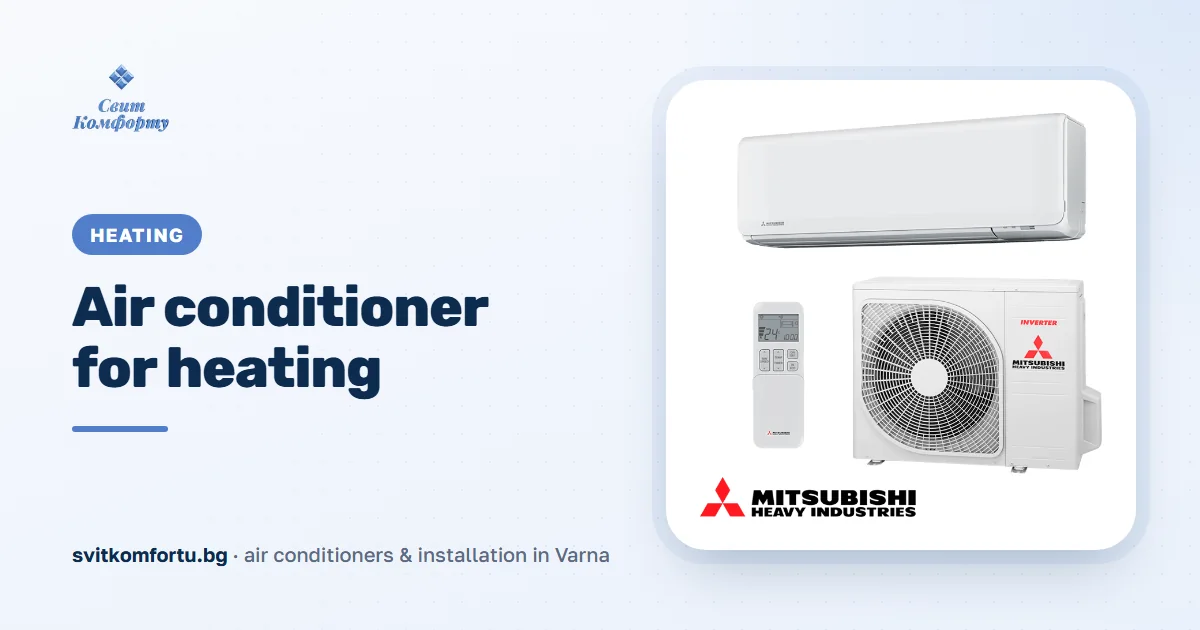
Air Conditioner for Heating – An Efficient and Economical Winter Solution
Why Choose an Air Conditioner for Heating?
More and more Bulgarian households are choosing an air conditioner for heating instead of traditional appliances such as radiators, convectors or electric heaters. The reason lies in modern inverter technology, which delivers high energy efficiency, lower electricity consumption and more precise control of the room temperature.
An inverter air conditioner for heating works on the heat pump principle — it doesn’t generate heat directly but extracts thermal energy from the outdoor air and transfers it into the room. Thanks to this process, the system achieves a higher efficiency than standard electric appliances.
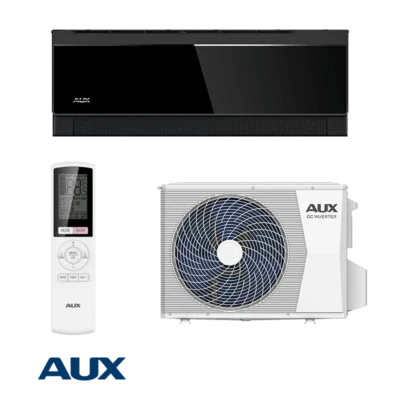
If you’re looking for a reliable solution for the winter season, take a look at our inverter air conditioners for heating , selected across different capacities and energy classes.
In our online air conditioner store you’ll find models suitable for apartments as well as larger homes, with a warranty and professional advice on choosing.
Even at low temperatures, modern air conditioners stay efficient and keep your home consistently comfortable. They also distribute warm air evenly, creating a more pleasant, cozy atmosphere on cold winter days.
Is an Air Conditioner Suitable for Winter Heating in Bulgaria?
Many people wonder whether an air conditioner works efficiently enough at sub-zero temperatures and whether it can provide steady heat through the cold winter months in Bulgaria.
Modern inverter air conditioners are designed precisely for these conditions. Standard models can operate without problems at temperatures around -10°C, and higher-end units remain efficient even at -20°C and below. This makes them fully suitable for most climate zones in the country.
Of course, heating efficiency depends on several key factors that should be considered when choosing:
- Room area
- Insulation quality of the home
- Orientation (north or south)
- Ceiling height
- Number and size of windows
If all these parameters are assessed correctly, a well-chosen air conditioner for heating an apartment can fully replace traditional heating systems such as radiators or convectors. It also heats the room faster and gives better temperature control.
For the system to be as efficient as possible, it’s important to have professional air conditioner installation . Correct installation ensures optimal performance, lower electricity consumption and a longer service life for the unit.
How Much Electricity Does Heating with an Air Conditioner Use?
One of the most important questions when choosing an air conditioner for heating concerns monthly electricity consumption. This is exactly where inverter technology shows its advantage.
Electricity use when heating with an air conditioner depends on several main factors:
- Outdoor temperature
- Energy class (A+, A++, A+++)
- Set indoor temperature
- Insulation quality
- Room area
- How many hours a day the unit runs
An inverter air conditioner adjusts its output to the room’s needs. Instead of constantly switching on and off, it maintains a steady temperature, which reduces peak consumption.
On average, high-end models among inverter air conditioners can use significantly less electricity than a convector or oil-filled radiator when heating the same room.
📊 Sample Monthly Cost for Heating a ~25 m² Room
| Heating appliance | Average consumption (kW/hour) | Hours per day | Estimated monthly cost* |
|---|---|---|---|
| Inverter air conditioner A++ | 0.6 – 0.9 kW | 8 h | 36 – 56 € |
| 2 kW convector | 2.0 kW | 8 h | 92 – 110 € |
| Oil-filled radiator | 1.8 – 2.0 kW | 8 h | 87 – 105 € |
*Calculations are approximate, based on an average electricity price and standard insulation.
Particularly good results come from established air conditioner brands such as LG air conditioners , which offer high seasonal efficiency (SCOP) and stable operation at sub-zero temperatures.
🧮 How to Calculate Your Electricity Cost Yourself
Formula:
Example:
Air conditioner with a real average consumption of 0.8 kW
Operation: 8 hours a day
Electricity price: €0.13/kWh
If you’re looking for reliable solutions in the seaside region, take a look at our offers for air conditioners in Varna , where you’ll get professional advice and a choice based on your home’s floor area and insulation.
This shows why an inverter air conditioner is an economical heating solution.
💡 Real Example – A 60 m² Apartment in Varna
Let’s look at a practical case:- 📍 60 m² apartment
- 📍 Good exterior insulation
- 📍 PVC windows
- 📍 2 air conditioners of 12 000 BTU each
- 📍 Temperature: 22°C
- 📍 Average winter temperature in Varna: 0°C to 7°C
Real cost:
- Average air conditioner consumption: ~0.7–1 kW
- Operation: ~7–9 hours a day
Air Conditioner for Heating Price – What to Expect?
When you’re shopping for an air conditioner for heating, price is one of the main factors in the final decision. However, keep in mind that a unit’s value isn’t determined by the brand alone but by a range of technical specifications and features. The price depends on:- The brand and the manufacturer’s origin
- Heating capacity (BTU)
- Energy class (A+, A++, A+++)
- Minimum operating temperature
- Additional features (Wi-Fi, filters, self-cleaning, ionizer)
- Noise level
- Warranty period
- Lower monthly electricity costs
- Higher efficiency at sub-zero temperatures
- Longer service life
- Quieter operation
📊 Approximate Prices of Air Conditioners for Heating in Bulgaria
| Air conditioner type | Capacity | Approximate price |
|---|---|---|
| Basic inverter | 9 000 BTU | 460 – 615 € |
| Mid-range A++ | 12 000 BTU | 665 – 970 € |
| High-end A+++ | 12 000 – 18 000 BTU | 1 020 – 1 790+ € |
| Professional model for -20°C | 12 000 – 18 000 BTU | 1 280 – 2 050+ € |
Prices are approximate and do not include installation.
Which Models Are Suitable for Heating — Choosing by Budget
The key indicator isn’t the price but the second letter of the energy class — it’s the one for heating. A model rated A++ for cooling and A+ for heating will cost you more in winter than a slightly more expensive unit rated A++ for heating. The second column shows exactly that.
| Model | Price | SCOP | Class cool./heat. | Works down to |
|---|---|---|---|---|
| TechPoint TCP H09 MAXCOOL | 300 € | 4,0 | A++ / A+ | −15 °C |
| TechPoint NPT 09 X-PRO NORDIC | 325 € | 4,0 | A++ / A+ | −20 °C |
| Nippon NPC 09 T-PRO NORDIC | 451 € | 4,6 | A+++ / A++ | −25 °C |
| Nippon KFR 09 GLORY PRO | 484 € | 4,6 | A+++ / A++ | −25 °C |
| Nippon NPC 12 T-PRO NORDIC | 499 € | 4,7 | A+++ / A++ | −25 °C |
| Gree Amber GWH09YD-S6DBA1 | 996 € | 5,1 | A+++ / A+++ | −30 °C |
| Gree Soyal II GWH09AKCXD | 1 014 € | 5,1 | A+++ / A+++ | −25 °C |
How to read the table. Up to €350 you get working heating, but with an A+ class and a limit of −15…−20 °C — enough for Varna and the Black Sea coast, where winter rarely drops below −10 °C. At around €450–500 you get A++ for heating and operation down to −25 °C — this is the sweet spot for price vs. running cost. Above €950 you move into A+++ on both ratings, with a SCOP of 5.1: every kilowatt-hour you pay for comes back as 5.1 kWh of heat.
The difference in the bill is bigger than the difference in price. At 2 500 kWh of heat per season, a unit with SCOP 4.0 uses about 625 kWh of electricity, and one with SCOP 5.1 about 490 kWh. At €0.15/kWh, that’s about €20 difference per season, so the more expensive model pays off slowly — buy it for the class and low-temperature performance, not for a promised quick return.
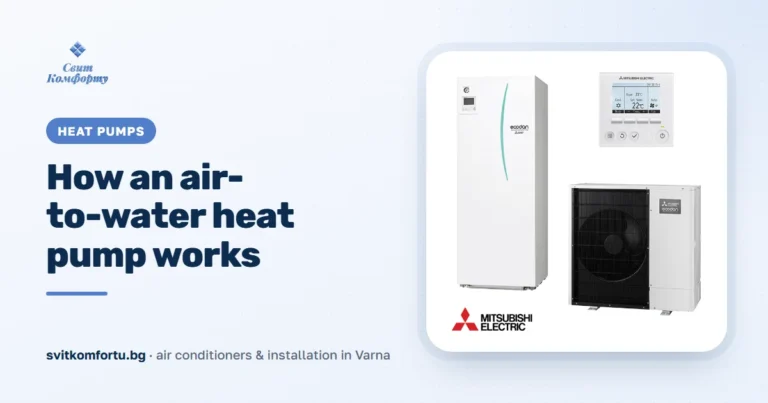
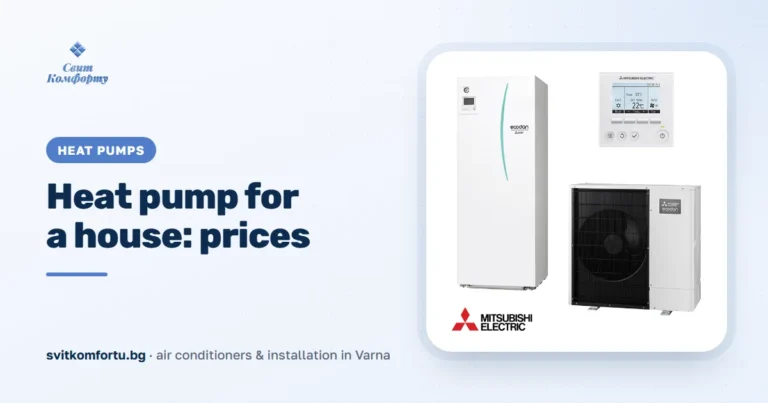
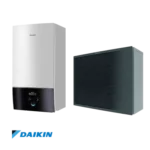
See the full selection in inverter air conditioners. If you’re heating an entire house or replacing a boiler, also take a look at air-to-water heat pumps — with SCOP up to 5.2 and capacities of 4.3–30 kW, they cover the whole home with one system.
When Is an Air Conditioner Not Enough?
Although an air conditioner for heating is an efficient solution for most homes, there are situations where a single indoor unit can’t provide even, steady heat in all rooms. Such cases include:- Large open-plan spaces
- Multi-room apartments with separate rooms and hallways
- Multi-story houses
- Buildings without good thermal insulation
- Rooms with high ceilings
- North-facing orientation and large glazed areas
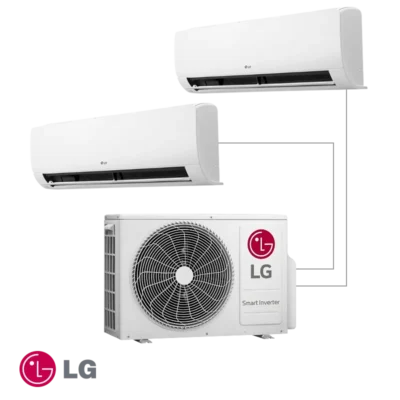
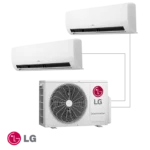
- Installation of a multi-split system with several indoor units
- A separate air conditioner in each zone
- Combined heating (for example, air conditioner + convector or underfloor heating)
If the house is large or you’re replacing a boiler, an air conditioner is no longer enough — the solution there is an air-to-water heat pump for the whole building. Real prices by floor area, with an explanation of why a more powerful unit is sometimes cheaper, are in Heat Pump for a House — Price for 100, 150 and 200 m².
❓ Frequently Asked Questions (FAQ)
Is heating with an air conditioner economical?
Yes, heating with an inverter air conditioner is one of the most economical solutions.
Thanks to its high COP and SCOP, the unit uses less electricity
than convectors and radiators.
How much does an air conditioner use per month in winter?
Consumption depends on the outdoor temperature, floor area, insulation and
energy class. An A++ inverter air conditioner can cut costs
almost in half compared with alternative appliances.
Does an air conditioner work at -15°C?
Yes, if the model is designed for low temperatures.
Some units work efficiently even down to -20°C.
Is an air conditioner better than a convector?
In most cases, yes. It offers lower running costs,
faster heating and the option of cooling in summer.
How long does an air conditioner last?
On average between 10 and 15 years with proper installation and regular maintenance.
Is it suitable for whole-home heating?
Yes, but larger homes may need a multi-split system
or more than one indoor unit.