Short answer: both types are installed above a suspended ceiling. The cassette is simpler: a panel stays on the ceiling, no ductwork is needed and the unit is serviced from below. The ducted unit is invisible, because only the grilles show in the room. In return it needs ductwork, more space above the ceiling and an access hatch, and it is planned together with the renovation. If the ceiling is already finished, a cassette is the usual choice. If the renovation is still ahead and you want the unit out of sight, the ducted unit is the better option.
The price of the equipment itself is close for the two types, and within one brand the outdoor unit is sometimes the same. The difference in budget comes from what surrounds the air conditioner: ducts, grilles, access hatches and the ceiling work. On top of that come noise in the room, access for maintenance and how visible the unit is.
How the two types work
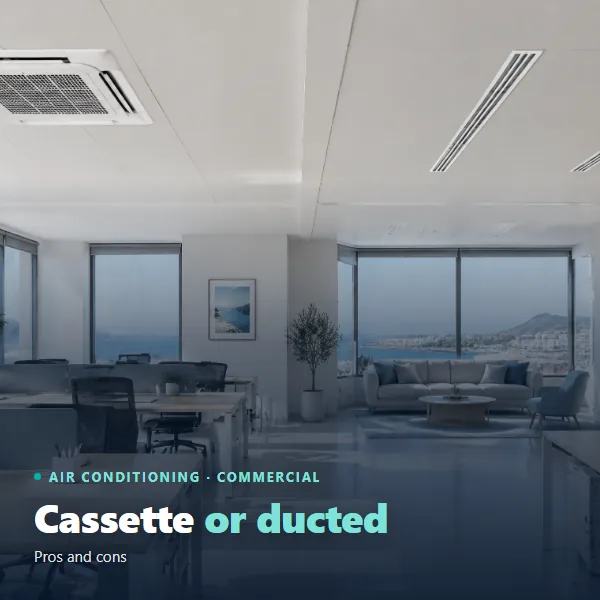
A cassette air conditioner is built into the suspended ceiling. The unit sits above the ceiling and a square panel stays below. Air is drawn in through the centre of the panel and leaves through the side slots, usually in four directions. So the unit serves the room it is installed in.
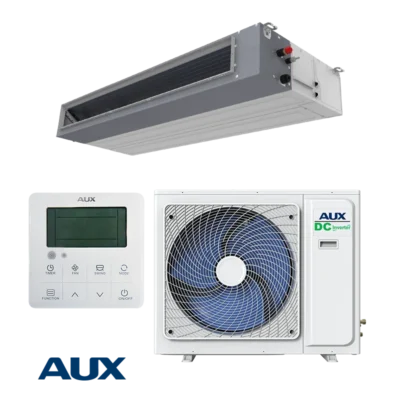
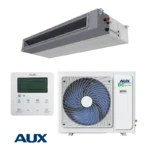
A ducted air conditioner also sits above the suspended ceiling or in a shaft, but it does not blow straight into the room. The air travels through ducts and comes out through grilles, and it returns to the unit through a separate grille. The ducts can reach several adjacent rooms, so one ducted unit can serve, for example, three offices or the rooms of a flat. The temperature, however, is the same for all of them.
Comparison table
| Criterion | Cassette | Ducted |
|---|---|---|
| What you see in the room | a panel on the ceiling | only the grilles |
| Suspended ceiling | required | required, or a shaft |
| Ductwork | not needed | needed, to the site design |
| Rooms per unit | one | one or several adjacent |
| Where the fan is heard | in the room, under the panel | above the ceiling; in the room you hear the air in the grilles |
| Service access | from below, through the panel | through an access hatch in the ceiling |
| When it is planned | also in a finished ceiling | with the renovation or construction |
| Price of equipment in stock | from 940 € | from 850 € |
All models are in the catalogues cassette air conditioners and ducted air conditioners, and the other types for large spaces are in the section commercial air conditioners.
Ducted air conditioner: pros and cons
- Pro: it is not visible. Only grilles remain in the room, and they can be lined up with the lighting or the ceiling design. That is why the ducted type is chosen for interiors where the unit must not show.
- Pro: several rooms with one unit. Adjacent rooms, a corridor and a bathroom can be served by one indoor and one outdoor unit, if the ducts reach each of them.
- Pro: a quiet room. The fan is above the ceiling, away from people.
- Con: ductwork and design. A ducted unit does not work without a duct network. It is designed for the specific site, so the choice is made before the suspended ceiling.
- Con: one temperature. If every room needs its own temperature, a multi-split or separate units fit better.
- Con: more complex servicing. The unit is reached through an access hatch, and the ducts are cleaned separately.
Cassette air conditioner: pros and cons
- Pro: no ductwork. You need an opening in the ceiling, the pipes to the outdoor unit, the drain and the power supply. In a grid ceiling the cassette takes the place of one or more tiles.
- Pro: air in several directions. It suits an open space where people are spread across the whole area.
- Pro: easy access. The filters come out through the panel without damaging the ceiling.
- Con: the panel is visible. In an office or a shop this rarely matters; in a living room or bedroom with a designer ceiling it may.
- Con: one room. A cassette cannot cool the room behind the wall.
- Con: the fan is in the room. At high speed it is heard more than a ducted unit, whose fan is above the ceiling.
Ceiling: how much space and what height
For both types there must be free space above the suspended ceiling for the unit and for the slope of the drain. The exact height is in the specification of each model. With a ducted unit you add the ducts and the space where they connect to the unit, so a ducted unit usually needs more room above the ceiling, especially the larger models. If there are only a few centimetres between the slab and the suspended ceiling, neither type can be installed, and you should look at ceiling-floor or floor-standing air conditioners.
The height of the room itself also matters. A cassette blows from the top down. In a hall with a very high ceiling, for example a shop with a mezzanine, the airflow may not reach the area where people are. Some cassette models have a high-ceiling setting, which is checked per model. A ducted unit supplies air through grilles that the designer places where they are needed, including low on the wall.
Noise: where it is heard and what it depends on
With a cassette, the fan is right above your head. In quiet mode it is calm, but at full power in summer heat it is audible. Compare the noise level of the indoor unit in the specification, looking at the same fan speed.
With a ducted unit you barely hear the machine in the room; you hear the air moving in the grilles. How quiet it will be depends on the duct design: the cross-section, the length and the number of grilles. A long network needs a model with higher external static pressure. This parameter is also in the specification, and the designer matches it to the ducts.
Servicing and maintenance
A cassette is serviced from below: you remove the panel grille, take out and clean the filters. Maintenance of the indoor unit also goes through the panel. Many cassette models have a built-in condensate pump, so the drain can be routed higher. For the ducted type, whether there is a pump is checked per model.
With a ducted unit the filter is at the return grille or at the unit itself, and maintenance needs an access hatch in the ceiling right under the unit. If no hatch is planned, every service starts with cutting the ceiling. The ducts are cleaned separately from the air conditioner. The price of maintenance for cassette and ducted units is agreed after a consultation; see the page air conditioner maintenance in Varna.
What it costs: equipment, installation and what is left outside them
At comparable capacity the price of the equipment is close. The table shows pairs of models of the same brand and capacity that are currently in stock in our catalogue.
| Brand and capacity | Ducted, € | Cassette, € |
|---|---|---|
| AUX, 12,000 BTU | 850 | 940 |
| Gree, 12,000 BTU | 1 080 | 1 092 |
| Mitsubishi Heavy Industries, 12,000 BTU | 1 589 | 1 755 |
| AUX, 24,000 BTU | 1 559 | 1 559 |
| Gree, 24,000 BTU | 1 590 | 1 686 |
| Gree, 48,000 BTU | 2 802 | 2 712 |
For Gree and AUX, the ducted and the cassette model of the same capacity use the same outdoor unit. The only difference is the indoor unit.
Installation of both types is in one price group. Standard installation of a cassette, ducted or floor-standing air conditioner costs 220 € up to 30,000 BTU, 245 € for 36,000 to 48,000 BTU and 270 € for 50,000 to 90,000 BTU. The pipe route is not included and is calculated after the survey. The prices apply to air conditioners bought from Svit Komfortu. All prices are on the page air conditioner installation in Varna, and what standard installation includes is explained in the article standard air conditioner installation. The ceiling, condensate and pipe run for a cassette unit are described in cassette air conditioner installation.
The full price of a ducted unit also includes things that are not part of our installation: the duct design, the ducts themselves with their insulation, the grilles, the access hatch and finishing the ceiling. They are done by the company carrying out the ventilation or the renovation of the site. So with the same equipment price a ducted system costs more overall, while a cassette is cheaper when the ceiling is already finished.
Running costs over the years include maintenance and access to the unit. A cassette is cleaned without any ceiling work. In a ducted system without an access hatch every service costs more, and dirty ducts need separate cleaning.
Which type for which space
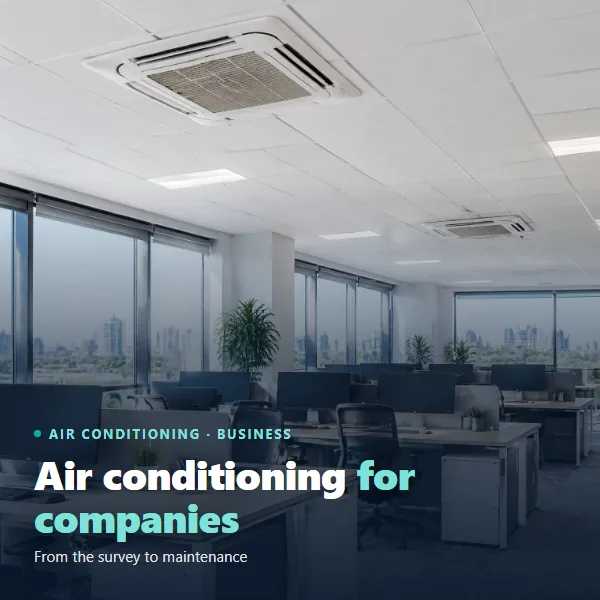
- Open-plan office with a grid ceiling. Cassette: it fits in place of the tiles, and the air spreads over all desks. How to choose air conditioning for a whole office is described in the article air conditioning for companies.
- Several small offices side by side, full renovation. Ducted, if one temperature for all is acceptable. If every office needs its own, a multi-split or separate units.
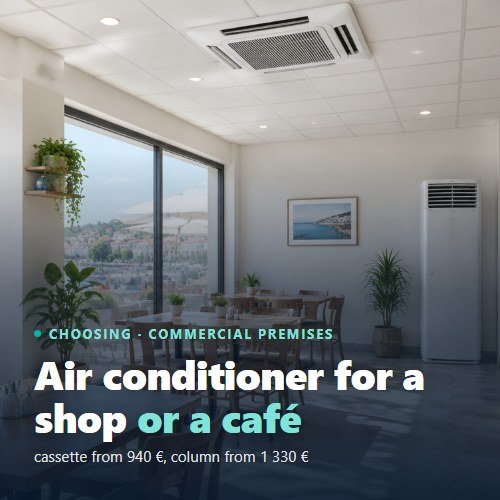
- Shop or restaurant with a suspended ceiling. More often a cassette, because the ceiling is usually finished and the hall is one room. The comparison with a floor-standing unit is in the article air conditioner for a shop or restaurant.
- Hotel room with a suspended ceiling in the entrance. Ducted: the unit sits above the entrance or the bathroom, and only the grilles stay in the room. The full plan by area is in the article air conditioners for hotels.
- Flat or house under major renovation. Ducted, if you want an air conditioner that is not visible and there is room above the corridor ceiling. A cassette is rarely chosen for a living room or bedroom because of the panel.
- Finished ceiling you do not want to break. Cassette, because it only needs an opening for the unit. If there is no suspended ceiling at all, look at the ceiling-floor and floor-standing models.
For both types the capacity is chosen by area. The guide is the table in the article how many BTU do I need: 12,000 BTU for 25 to 35 m², 18,000 BTU for 35 to 50 m², 24,000 BTU for 50 to 70 m². With a ducted unit serving several rooms, the area of all of them is added up.
What we do and what we do not
We supply and install cassette and ducted air conditioners: the indoor unit above the ceiling, the outdoor unit, the pipes between them, the drain and the power supply, followed by vacuuming and commissioning. With a ducted unit we connect it to the finished duct network. We do not carry out the ventilation design, the ducts, their insulation or the grilles. We work to the design of the client or their contractor.
The survey is free in Varna and for sites up to 200 km from the city. After the survey you receive a written quote within 24 hours, and companies get a VAT invoice. The installation warranty is 1 year.
Frequently asked questions
Which is better: a cassette or a ducted air conditioner?
It depends on the ceiling and on whether the unit may be visible. A cassette is simpler and convenient with a finished suspended ceiling. A ducted unit is invisible and can serve several adjacent rooms, but it needs ductwork and is planned together with the renovation.
What are the cons of a ducted air conditioner?
It needs ducts to a design, more space above the ceiling and an access hatch for servicing. All rooms on one unit share one temperature, and the ducts are cleaned separately.
Which one is quieter?
In the room the ducted unit is usually quieter, because its fan is above the ceiling and you only hear the air in the grilles. How quiet it will be depends on the duct design. For a cassette, compare the indoor unit noise in the specification.
Do you make the ducts for a ducted air conditioner?
No. We install the air conditioner and connect it to the finished duct network. The ducts, insulation and grilles are done by the company handling the ventilation or the renovation, to the site design.
How much does installing a cassette or ducted air conditioner cost?
Standard installation costs 220 € up to 30,000 BTU, 245 € for 36,000 to 48,000 BTU and 270 € for 50,000 to 90,000 BTU for air conditioners bought from Svit Komfortu. The pipe route is calculated after the free survey in Varna and up to 200 km.