Summers in Varna keep getting hotter, and winters less predictable. An air conditioner is no longer a luxury but a must for every apartment. Yet the market is flooded with hundreds of models, brands and technical terms – BTU, SEER, inverter, hyper-inverter, R32, A+++ – and making a choice can turn into a real headache.
In this guide, the specialists at Svit Komfortu walk you through the entire process step by step: from calculating the capacity you need, to comparing brands and technologies, to arranging the installation. It is written for first-time buyers, but anyone replacing an old unit will find useful information here too.
If you already know what you’re looking for, you can go straight to our online catalog of air conditioners or contact us for a free consultation.
1. What capacity do you need? – calculating BTU and kW
Choosing the right capacity is the single most important decision when buying an air conditioner. Buy a unit that’s too weak and it will run nonstop, use more electricity and wear out quickly. Buy one that’s too powerful and it will reach the set temperature so fast that it won’t have time to remove moisture from the air. The result: a damp, uncomfortable room.
How to calculate the capacity you need
The basic rule is about 100 W (or 340 BTU) of cooling capacity per 1 m² in a standard room with a ceiling height of 2.5–2.7 m, average insulation and moderate sun exposure. Based on this formula, you get the following table:
| Room area | Cooling capacity (kW) | BTU | Typical model |
|---|---|---|---|
| up to 20 m² | 2,0 – 2,5 kW | 9 000 BTU | Bedroom, kids’ room, small studio |
| 20 – 30 m² | 2,5 – 3,5 kW | 12 000 BTU | Living room, large bedroom |
| 30 – 50 m² | 4,0 – 5,5 kW | 18 000 BTU | Spacious living room, studio apartment |
| 50 – 70 m² | 5,5 – 7,0 kW | 21 000 – 24 000 BTU | Large living room, open-plan kitchen |
| over 70 m² | 7,0+ kW | over 24,000 BTU | Villa, large space or multi-split |
When to add 15–20% to the standard calculation
- Top floor or attic apartment – the roof absorbs direct sunlight and radiates heat downward.
- South- or west-facing rooms – the sun shines directly into the room for much of the day.
- Rooms with large glass areas (panoramic windows) – glass is a poor insulator.
- Older buildings with poor insulation – typical of Varna apartment blocks from the 1970s and 1980s.
- A room full of electronics – computers, TVs and household appliances give off a significant amount of heat.
- Many occupants – each person generates roughly 80–120 W of heat.
2. Types of air conditioners for apartments
Wall-mounted split air conditioner
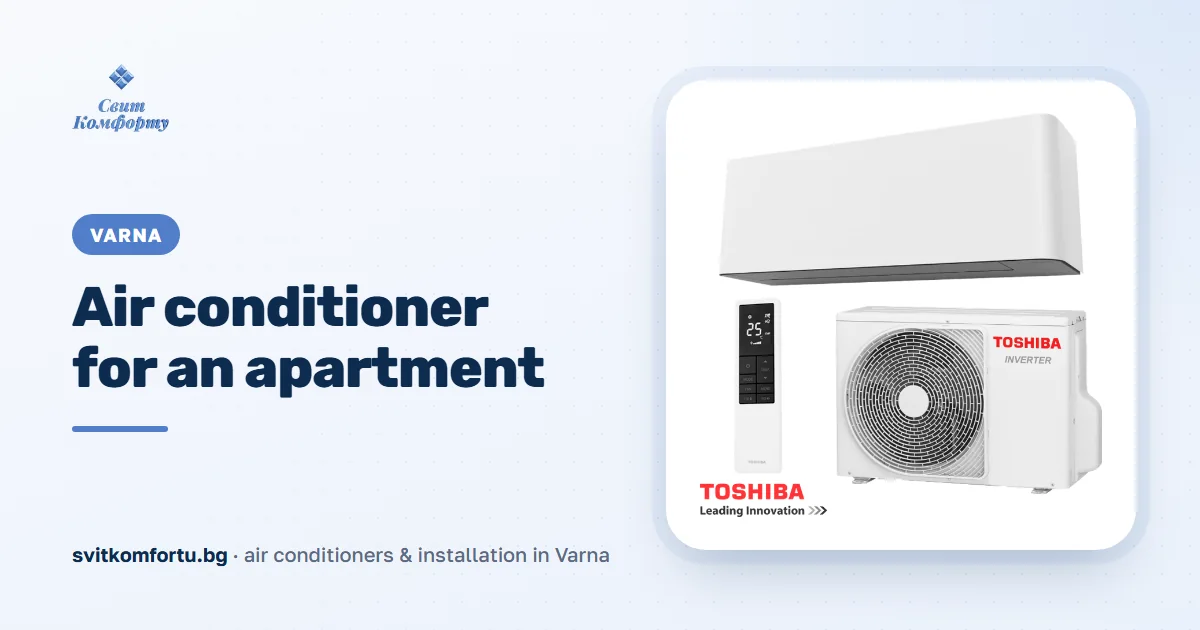
This is by far the most popular choice for apartments. The indoor unit is mounted on the wall about 2–2.2 m above the floor, and the outdoor unit goes on the facade or a balcony. A wall-mounted split is quiet, energy-efficient and easy to control. It suits rooms from 15 to 50 m² and is the standard choice for bedrooms, living rooms and kids’ rooms.
Browse our full range of inverter wall-mounted air conditioners with up-to-date prices.
Multi-split system
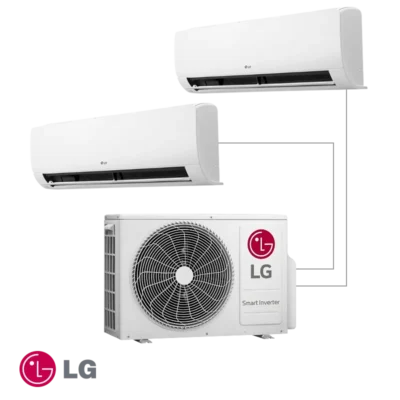
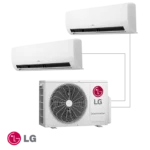
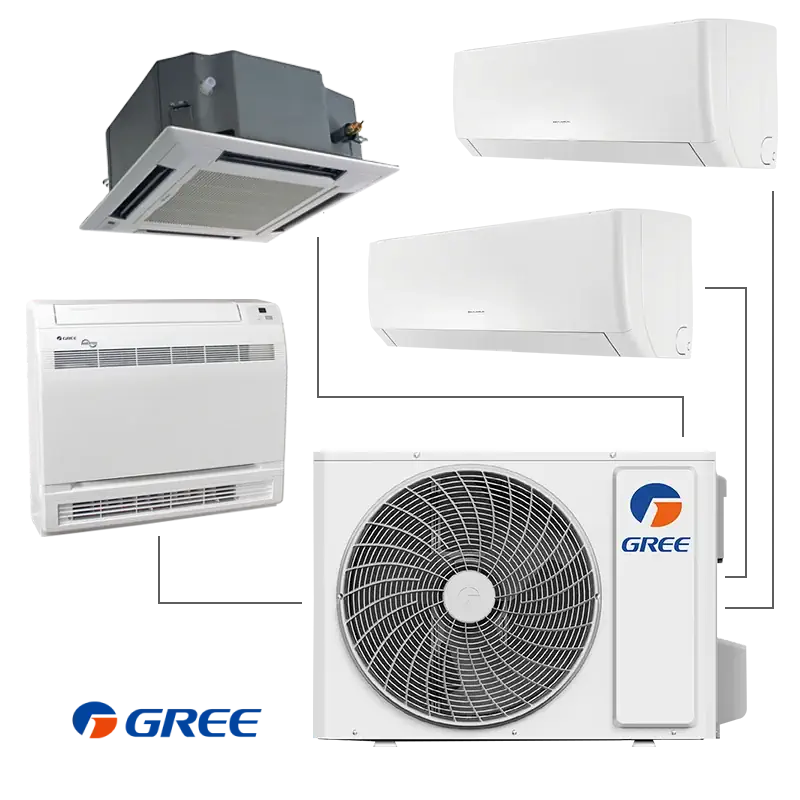
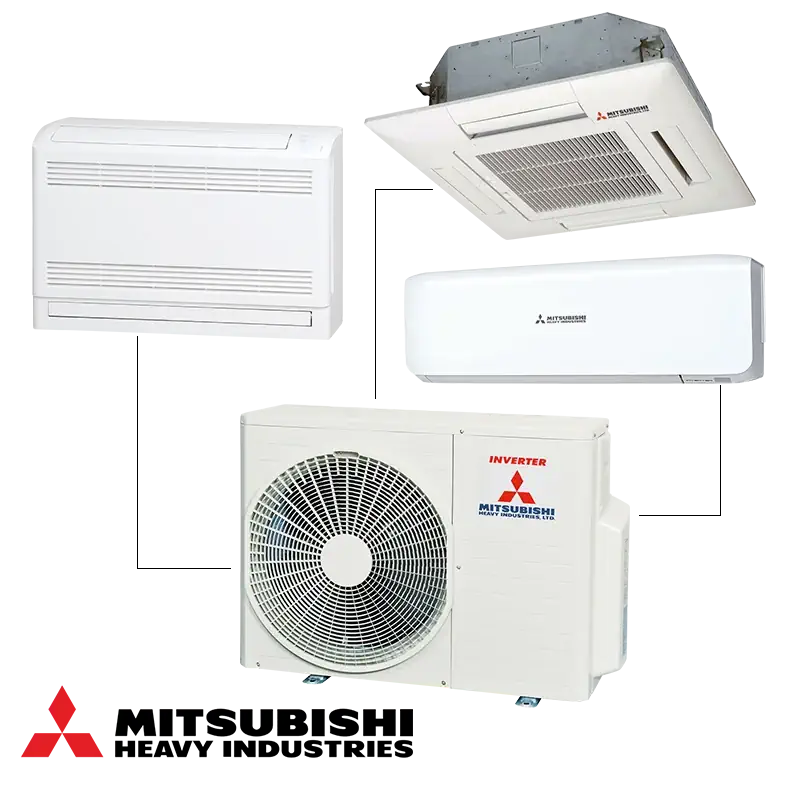
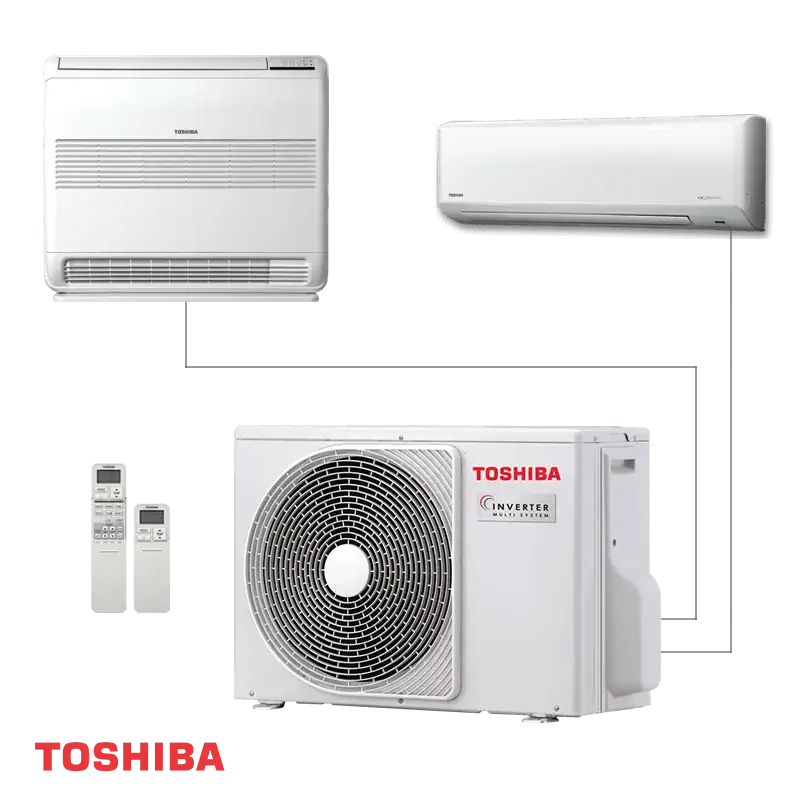
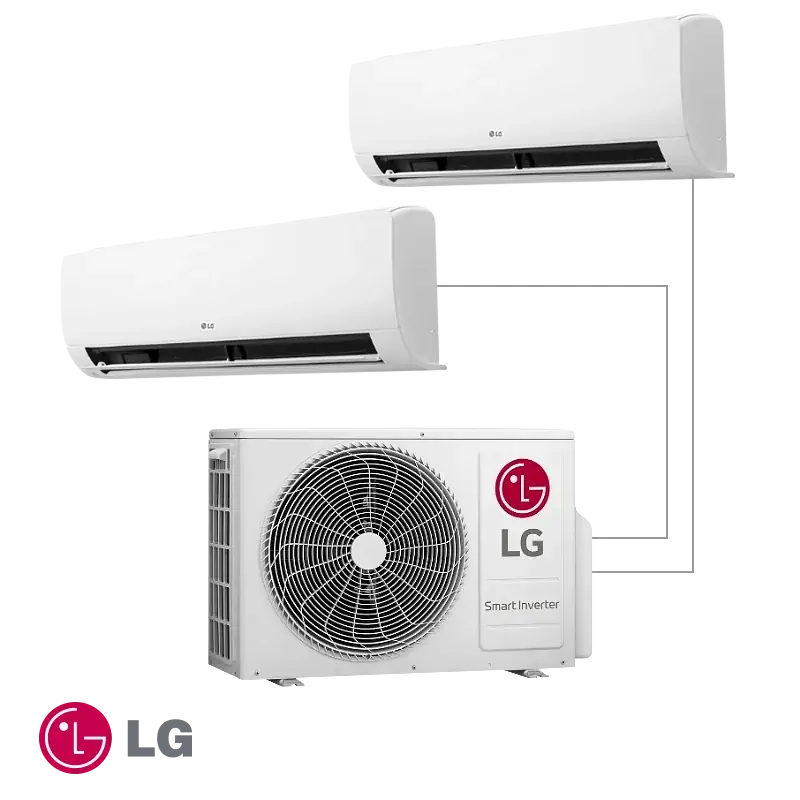
With a multi-split system, a single outdoor unit runs 2 to 5 indoor units in different rooms. The benefits are obvious: just one compressor unit on the facade, central control and a cleaner look for the building. The downside is that if the outdoor unit fails, cooling stops in the whole apartment.
See the available multi-split systems in our catalog.
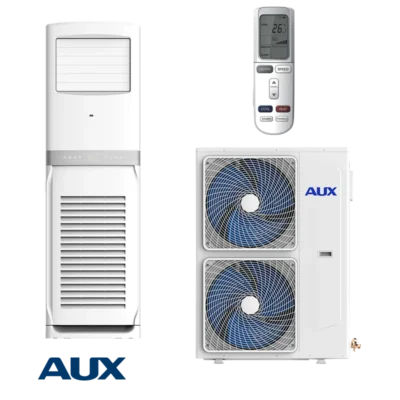
Floor / floor-standing air conditioner
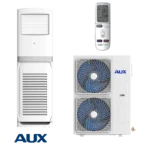
The indoor unit sits on the floor or is mounted low on the wall. It’s ideal for rooms with panoramic glazing, attic apartments or rooms where wall mounting is impractical. Warm or cool air distributed from the floor upward is especially effective in heating mode.
Browse floor and floor-standing air conditioners in our store.
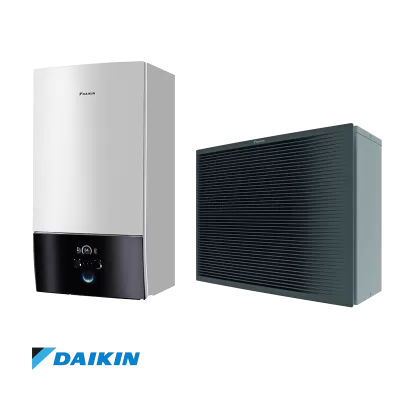
Air-to-air heat pump
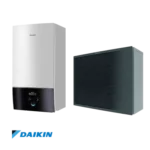
It works on the same principle as an air conditioner but is optimized mainly for heating. Modern inverter heat pumps achieve a COP (coefficient of performance) above 4.0 – meaning that for every 1 kW of electricity they produce more than 4 kW of heat. They operate reliably at temperatures down to -25°C.
Browse our range of heat pumps.
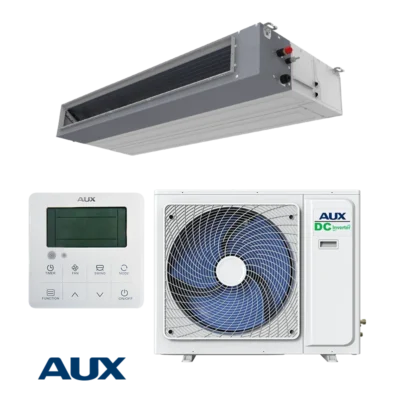
Cassette and ceiling air conditioners
Designed mainly for offices, shops and public spaces. They are rarely used in residential apartments – mostly in luxury apartments with suspended ceilings. For business needs, take a look at our professional systems.
3. Inverter, hyper-inverter and conventional air conditioners
Conventional (on/off) air conditioner
The compressor runs at full power and shuts off once it reaches the set temperature, then switches back on at full power again. The result: constant temperature swings, high power consumption and more wear on the compressor. These models have practically disappeared from the market.
Inverter air conditioner
The compressor adjusts its speed smoothly – ramping up when a quick correction is needed and slowing down once the temperature is reached. The result: a more stable temperature, lower power consumption (30–50% less than on/off units) and much quieter operation. All air conditioners in our online store are inverter models.
Hyper-inverter air conditioner
DC inverter (hyper-inverter) technology is the next level. The compressor is direct-drive with a wider operating range. The main advantages:
- They run in heating mode at down to -25°C outdoors (standard models stop at around -15°C)
- They achieve energy class A+++ in heating
- Lower noise level – from 19 dB(A) for the indoor unit
- Faster response when settings change
- Longer compressor life
4. Energy classes – A, A+, A++, A+++
Since 2021, the EU has used a new energy efficiency scale for air conditioning equipment: from G (lowest) to A+++ (best). It applies separately to cooling mode (summer indicator SEER) and heating mode (winter indicator SCOP).
How to read the energy label
- SEER (Seasonal Energy Efficiency Ratio) – cooling efficiency. Values above 8.5 are class A+++.
- SCOP (Seasonal Coefficient of Performance) – heating efficiency. Values above 5.1 are class A+++.
The real-world savings
Here’s what the difference between A+ and A+++ looks like for a 12,000 BTU model:
| Class | SEER | Consumption (8 h/day × 120 days) | Approx. annual cost (electricity) |
|---|---|---|---|
| A+ | 6,1 | ~310 kWh | ~38 € |
| A++ | 6,8 | ~275 kWh | ~34 € |
| A+++ | 8,5+ | ~220 kWh | ~28 € |
The difference between A+ and A+++ is about €10 a year for cooling alone. Once you factor in winter use, the savings grow considerably. A more efficient model usually pays for itself within 2–4 years.
5. Air conditioner noise – why it matters and how to judge it
Many buyers ignore the noise level until the air conditioner is installed in the bedroom – and by then it’s usually too late. Noise is measured in decibels dB(A) and follows this rough scale:
- 19–22 dB(A) – very quiet, practically imperceptible; ideal for a bedroom
- 23–26 dB(A) – quiet, comparable to a whisper; suitable for a bedroom or kids’ room
- 27–32 dB(A) – moderate noise, acceptable for a living room or office
- over 35 dB(A) – noticeable noise; not recommended for sleeping areas
The Daikin Comfora and Perfera, Mitsubishi Electric MSZ-AP, AUX C-PRO and Gree Sapphire series are among the quietest models in their price ranges.
Outdoor unit noise
Don’t forget the compressor noise outside – especially if a neighbor’s balcony or window is close to the installation spot. Values below 50 dB(A) for the outdoor unit are a good benchmark in a residential setting.
6. Refrigerant types: R32 vs R410A
The refrigerant (freon) is the substance that circulates between the indoor and outdoor units and transfers heat. When buying, check the unit’s labeling.
R32 – the new standard
Since around 2018–2020, practically all new models use R32. Its advantages:
- GWP (Global Warming Potential) = 675 – about 3 times lower than R410A
- Better thermodynamic efficiency – the system reaches a higher SEER under the same conditions
- Easier maintenance – no component blending required
R410A – an outdated standard
If you come across an R410A model on the market, it’s probably old stock or made for non-EU markets. We don’t recommend buying it – spare parts and servicing will become harder to find and more expensive.
7. Leading air conditioner brands – what Svit Komfortu offers
We work only with proven manufacturers and provide warranty service and genuine spare parts for each of them. Our full range is available on the page Air conditioning brands.
Daikin – the Japanese leader
Daikin is a world leader in air conditioners and heat pumps. The Japanese group makes everything in-house – from the compressor to the electronics. The result is outstanding reliability and long product life.
Series in our store:- Daikin Sensira – an economical inverter model, class A++, R32. An excellent value-for-money choice.
- Daikin Comfora – quiet (from 19 dB), A+++, Wi-Fi ready. Ideal for a bedroom.
- Daikin Perfera W – hyper-inverter, A+++, runs at -25°C, built-in Wi-Fi control.
- Daikin Stylish – a designer model with a unique round grille, A+++.
- Daikin Emura 3 – premium class, Scandinavian design, A+++.
AUX – quality at an affordable price
AUX is a Chinese manufacturer with more than 30 years of history, its own R&D center and annual output of over 10 million air conditioning units. The J-Smart series supports voice control and Wi-Fi control via an app, at a price well below its Japanese rivals.
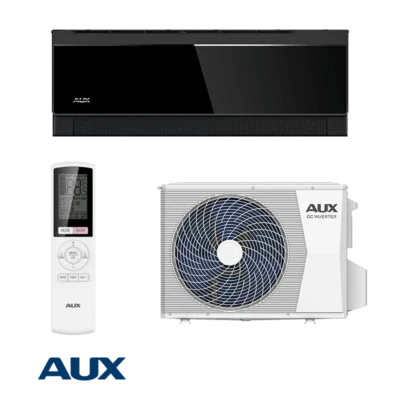
Series in our store:- AUX J-Smart – 12,000 BTU inverter, A++, Wi-Fi, R32. From around €490
- AUX New-Q – quiet inverter, A++, R32, great value for money. From ~€465
- AUX C-PRO – 9,000 BTU, A++, low noise, R32. Ideal for a bedroom, from ~€645
Mitsubishi Electric – Japanese precision
The MSZ/MUZ series is synonymous with quiet, reliable operation and exceptional durability. Mitsubishi Electric hyper-inverter models are especially popular for bedrooms and kids’ rooms thanks to their low noise (from 19 dB) and precise temperature control. They run in heating mode down to -25°C.
See all Mitsubishi Electric air conditioners →Gree – the world’s manufacturing leader
Gree Electric Appliances is the world’s largest manufacturer of dedicated air conditioning equipment by volume. Its factories also produce units for a number of Japanese and European brands. The Sapphire series offers hyper-inverter performance (A+++) at a much more affordable price than its Japanese competitors.
See all Gree air conditioners →Kaisai – a European brand with good value for money
Kaisai is a European brand (manufactured in China) with more than 20 years on the market. The Fly and Ice White/Black series use R32 and achieve class A++. They suit standard apartments with moderate loads and tighter budgets.
See all Kaisai air conditioners →8. Air conditioner prices in Varna – what to expect
Prices vary considerably depending on the brand, capacity and technology level. The guide prices below are for a standard wall-mounted split without installation, VAT included:
| Segment | BTU / capacity | Approx. price (€) | Recommended brands |
|---|---|---|---|
| Budget | 9 000 BTU | 410 – 560 € | Kaisai, AUX |
| Mid-range | 12 000 BTU | 510 – 820 € | AUX, Gree, Daikin Sensira |
| Premium | 12 000 – 18 000 BTU | 820 – 1 530 € | Daikin Comfora/Perfera, Mitsubishi Electric |
| Top tier | any capacity | 1 530+ € | Daikin Stylish/Emura, Mitsubishi Electric Zen |
For current prices, see the page air conditioners Varna.
9. Air conditioner installation in Varna – process, prices, warranty
What standard installation includes
When we talk about „standard installation,“ we usually mean the following scope:
- Mounting the indoor unit on the wall (at the right height)
- Mounting the outdoor unit on the facade or balcony (with mounting brackets)
- Connecting copper piping up to 3 meters
- Drilling through the wall (1 hole, standard thickness)
- Power supply from the existing electrical panel up to 1.5 m
- Charging with R32 refrigerant and vacuuming the system
- Functional test of cooling and heating
- Instructions on operation and care
When installation is more complex (and more expensive)
Extra costs may apply for:
- Piping longer than 3 m – charged per linear meter
- Installation (more than 3 m above ground) – requires scaffolding or rope-access technicians
- Drilling through reinforced walls or brick masonry thicker than 40 cm
- Installing a special drain where natural drainage isn’t possible
- Replacing the electrical panel or adding extra wiring
For an exact quote, visit the page air conditioner installation in Varna – price or contact us for an on-site survey.
Our installation teams
All Svit Komfortu installers hold certificates for handling refrigerants under Regulation (EU) 517/2014. We use only genuine copper piping and quality thermal insulation, and we clean up the work area after installation.
Warranty
For the installation work we carry out, we provide a 2-year warranty on labor. The manufacturer’s warranty on the unit itself ranges from 2 to 5 years depending on the brand. Daikin offers up to 5 years when you register the product.
Maintenance and service
We recommend maintenance once a year – before the summer season. It includes cleaning the filters and heat exchanger, checking the refrigerant pressure and testing all functions. Our service teams work with all brands of air conditioning equipment.
We serve all of Bulgaria
Our main base is in Varna, but we also carry out installation and service in Sofia, Plovdiv, Burgas and, on request, in many other cities across the country. For inquiries outside Varna, please contact us via the page Contacts.
You’ll find full details about the service on the page air conditioner installation in Varna.
10. Pre-purchase checklist
Before you hit „Add to cart,“ check the following:
- ✅ Capacity is correctly calculated for the area + adjustment factors
- ✅ R32 refrigerant – don’t buy R410A models
- ✅ Energy class A++ or A+++ for regular use
- ✅ Noise level – under 26 dB for a bedroom, under 32 dB for a living room
- ✅ Wi-Fi control – handy if you have a smart home or want to switch the AC on before you get home
- ✅ Heating mode – check the minimum operating temperature if you’ll use it in winter
- ✅ Warranty – at least 2 years on the unit; check the terms
- ✅ Service network – the brand and the seller should provide service in your area
For inspiration, take a look at the projects we’ve completed on the page Our projects.
11. Frequently asked questions
How much electricity does an air conditioner use per month?
A 12,000 BTU inverter air conditioner with class A++ uses on average about 0.7–1.1 kWh for every hour of operation in cooling mode. Running 8 hours a day for 30 days, that’s about 170–265 kWh/month. At an average rate of about €0.13/kWh, it comes to €21–34 per month for cooling alone.
Can an air conditioner also be used for heating in winter?
Yes. All inverter models work in „reverse-cycle heating“ mode. At temperatures above -10°C, efficiency is very good – a COP (coefficient of performance) of 3.0 to 4.5. Hyper-inverter models stay efficient down to -25°C outdoors. For more information, see our article on air conditioners for heating – tips and recommendations.
How many air conditioners does a two-room apartment need?
It depends on the layout. With an open-plan kitchen-living room up to 35 m² and a bedroom up to 18 m², you’d usually need 2 separate wall-mounted units or 1 multi-split system with 2 indoor units. A multi-split costs more upfront but needs only one unit on the facade.
Which should I choose – built-in Wi-Fi or an add-on Wi-Fi module?
If Wi-Fi control matters to you, choose a model with built-in Wi-Fi (for example Daikin Perfera, Mitsubishi Electric MSZ-EF, AUX J-Smart). Add-on Wi-Fi modules work, but they sometimes have limited functionality and depend on manufacturer support.
Where can I find reviews of a specific model?
Customer reviews for each product are on the corresponding product page. You can also browse our collected page air conditioners Varna – reviews.
Do you install in new builds?
Yes. We work with private clients, investors and property developers. In new construction, it’s important to plan the piping at the shell stage – this saves drilling through finished walls and cuts costs. Contact us early in the construction process for a free consultation.
Do you offer financing or installment payments?
We offer a variety of payment options. For current terms, visit our contact page or get in touch with us directly.
How do I book an installation?
Contact us by phone, email or through the contact form on the Contacts page. We usually confirm a date within the same business day. In peak season (June–August), we recommend booking installation at least 2–3 weeks in advance.
12. Conclusion – make the right choice
Choosing an air conditioner for your apartment involves more than just the price of the unit. Correct capacity sizing, the right technology, a good balance between price and energy efficiency, reliable installation and quality after-sales service – all of these together determine whether you’ll still be happy with the unit 5 or 10 years from now.
Summary of the key criteria:
- Capacity: calculate BTU based on the area and add 15% for unfavorable conditions
- Technology: inverter is the minimum; hyper-inverter for winter use or upper floors
- Refrigerant: R32 only for a new unit
- Energy class: A++ minimum, A+++ for daily use
- Noise: under 26 dB for a bedroom
- Brand: Daikin and Mitsubishi Electric for maximum reliability; AUX, Gree and Kaisai for good value for money
- Installation: by certified specialists only
Svit Komfortu is your trusted partner for air conditioning equipment, installation and service in Varna, Sofia, Plovdiv, Burgas and across the country. We offer a wide range of leading brands, certified installation teams and warranty service.
Ready to choose an air conditioner for your apartment?
👉 Browse the full air conditioner catalog | Request an installation quote