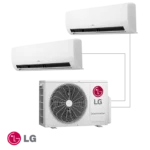
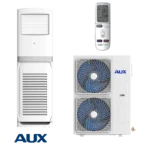
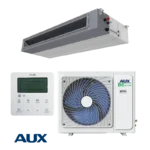
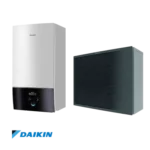
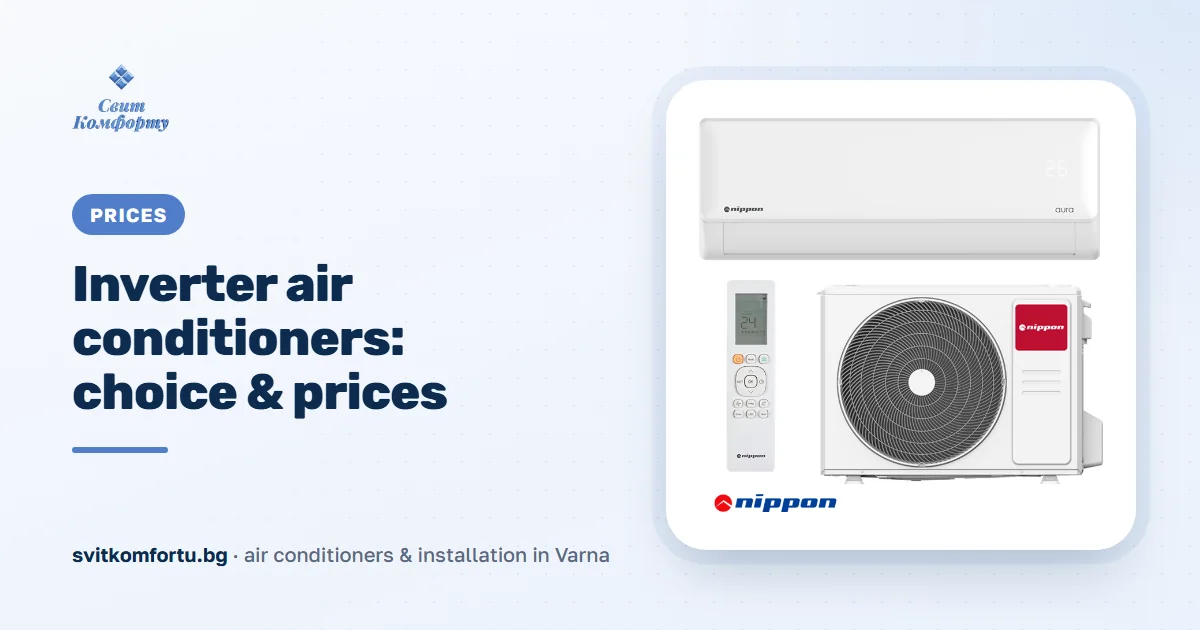
If you’re looking for inverter air conditioners in Bulgaria, you probably want more than just a unit for summer cooling. Today, an air conditioner has become a strategic investment – a solution for year-round comfort, steady winter heating and lower electricity costs.
In recent years, more and more Bulgarian households have been replacing traditional heating systems with high-efficiency inverter models. The reason is clear – modern technology allows up to 40% lower electricity consumption compared with standard electric heaters, while maintaining a constant temperature without sharp fluctuations.
But choosing the right air conditioner isn’t as easy as it looks at first glance. The market is flooded with dozens of brands, different capacities, energy classes, promises of “super savings” and marketing terms that often confuse buyers. Besides choosing the right model, another key factor for efficiency is professional air conditioner installation, which ensures maximum performance and a long service life.
Key Questions When Choosing an Inverter Air Conditioner
The main question isn’t simply “Which is the best air conditioner?”, but rather:
- Which model is best suited to your floor area?
- Will it be efficient at -15°C or -20°C?
- How much will heating really cost you in winter?
- Is a Japanese air conditioner better than a Chinese one?
- Is it worth investing in a more expensive model?
What Will You Find in This Expert Guide?
This page was created as a complete expert guideto help you make an informed choice. We’ll look at both the technical parameters (SEER, SCOP, COP, BTU) and the practical factors – insulation, orientation, type of home and real electricity costs in Bulgaria.
We’ll also analyze the following key topics:
- How inverter technology works and why it’s more economical
- How to calculate the right capacity based on floor area and conditions
- Which air conditioner to choose for a bedroom, living room or office
- Electricity consumption and the real monthly bill in different scenarios
- Heating at -15°C and -20°C – which models can handle it
- Japanese vs. Chinese air conditioners – an objective comparison
- Installation and hidden risksthat affect efficiency – especially if you live in Varna and the surrounding region, where quality air conditioner installation in Varna is decisive for the system to work properly.
- Current prices in Bulgaria for 2026
If you’re planning to buy an inverter air conditioner in 2026, this guide will save you time, money and potential mistakes. Instead of relying solely on advertising promises, here you’ll get structured information, real examples and practical recommendations.
Whether you’re looking for an air conditioner for 25 m², 40 m² or 60 m², and whether you’re heating an apartment or a house, choosing the right unit and professional installation are the key to long-term efficiency and savings.
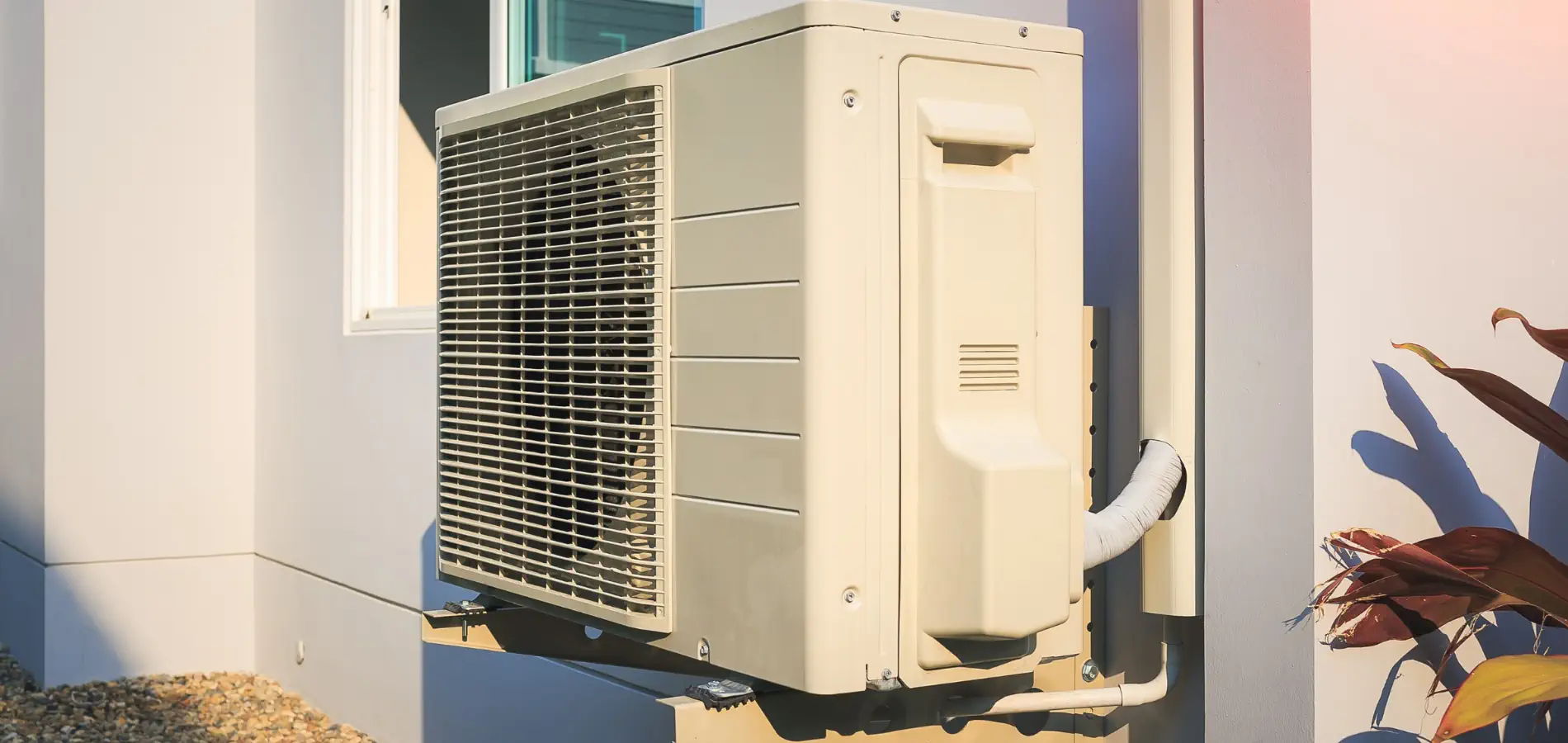
What Are Inverter Air Conditioners?
What Is Inverter Technology, Really? It’s the air conditioner’s ability to “think.” Instead of working on an “all or nothing” principle, the unit precisely adjusts the compressor speed to the conditions in the room.
The result?
- You avoid temperature spikes
- You protect the unit from wear
- You save up to 30% on electricity costs
How Is It Different from a Standard Air Conditioner?
| Feature | Standard (On/Off) | Inverter |
|---|---|---|
| Compressor operation | Switches on / off | Adjusts speed |
| Electricity consumption | Higher | 30–40% lower |
| Temperature comfort | Fluctuations | Constant temperature |
| Noise | Louder | Quieter |
This makes inverter models much better suited for heating in Bulgaria.
How to Choose the Right Capacity for Your Floor Area?
Why Is Air Conditioner Capacity Critical? Choosing an undersized unit is a mistake that leads to three certain problems:
- Financial hit: Your electricity bills will be higher because the air conditioner will never leave maximum mode.
- Technical risk: The compressor wears out many times faster.
- Discomfort: The unit won’t be able to heat your room at low outdoor temperatures.
Basic formula
100–120 W per square meter with a standard ceiling height of 2.60 m.
If you’re looking for a ready-made solution based on the room’s floor area, you can browse directly:
Extended Table for Different Conditions
| Floor area | Good insulation | Poor insulation | Recommended BTU |
|---|---|---|---|
| 20 m² | 2.2 kW | 2.8 kW | 9000 |
| 25 m² | 2.8 kW | 3.5 kW | 12000 |
| 35 m² | 4.0 kW | 5.0 kW | 18000 |
| 50 m² | 6.0 kW | 7.0 kW | 24000 |
Air Conditioners for Different Rooms
Choosing an inverter air conditioner depends not only on the floor area but also on the purpose of the room. A bedroom has different requirements from a living room, and an office places completely different technical demands on the system.
Below we take a professional approach to choosing an air conditioner by room type.
Air Conditioner for a Bedroom
A bedroom requires maximum comfort, quiet and a stable temperature at night. For rooms between 12 and 25 m², the most common choices are models such as
air conditioners for 20 m²
or
air conditioners for 25 m²,
depending on the insulation and ceiling height.
Key requirements:
- Low noise level – below 22 dB (in quiet mode)
- Night mode (Sleep Mode)
- 9000 or 12000 BTU depending on floor area
- Smooth speed regulation
- Fine air filtration
Technical parameters:
- Minimum heating output: 0.8–1.0 kW to avoid overheating.
- Wide modulation range: less frequent on/off cycling.
- Noise level:
- 19–21 dB – premium class
- 22–25 dB – good standard
- Over 30 dB – not recommended for a bedroom
- 3D airflow: even distribution without a direct draft.
- Wi-Fi control: remote start before bedtime.
Recommended capacity:
| Floor area | BTU | kW |
|---|---|---|
| 12–18 m² | 9000 | 2.5 kW |
| 18–25 m² | 12000 | 3.5 kW |
Pro tip: It’s better to have a slightly more powerful model running at low speed than an underpowered one that constantly strains the compressor.
Air Conditioner for a Living Room
The living room is usually the largest room and often serves as the main heating zone in winter. For an area of 30–40 m², the best fit is
air conditioners for 35 m²,
which provide enough capacity and stable operation at low temperatures.
Key requirements:
- 12000 – 18000 BTU
- SCOP above 4.6
- More powerful fan
- Stable operation at -15°C
Technical parameters:
- SCOP:
- ≥ 4.6 – very good efficiency
- ≥ 5.0 – premium heating
- Heating output at -7°C and -15°C: check the real values.
- Outdoor unit heater: prevents freezing.
- Maximum airflow: for 18000 BTU – over 800–900 m³/h.
- Operating range:
- Cooling: up to +46°C
- Heating: down to -20°C (high-end)
Living rooms often have higher heat losses due to windows and open spaces.
Air Conditioner for an Office
An office places different technical demands because of equipment, lighting, people and longer working hours. For larger spaces, it’s a good idea to browse the entire category of
inverter air conditioners
and choose a model with higher capacity.
Key requirements:
- Higher capacity
- Good filtration
- Operation 8–10 hours a day
- Stable airflow
Technical factors:
- Additional heat load: 150–200 W per person + equipment.
- Airflow: higher airflow = better circulation.
- Filtration:
- PM2.5 filter
- Antibacterial filter
- Ionization
- Drainage during continuous operation: important in summer mode.
- Continuous operation: not all budget models are suitable.
Sample capacity for an office:
| Area | Recommended capacity |
|---|---|
| 20 m² | 12000 BTU |
| 30 m² | 18000 BTU |
| 40 m² | 24000 BTU |
Tip: With a lot of equipment, add a 10–15% capacity reserve.
Inverter Air Conditioner for Heating at -20°C
For stable operation at low temperatures, choose high-end
inverter air conditioner models
with a compressor heater and a heated drain pan.
- Compressor heater
- Drain pan heater
- Special winter mode
| Temperature | Budget model | Premium model |
|---|---|---|
| -5°C | Works stably | Works stably |
| -15°C | Loses capacity | Stays efficient |
| -20°C | Frequently shuts off | Runs at low speed |
Electricity Consumption – A Real Calculation
Formula: Power (kW) × Operating hours × Price per kWh
| Model | Average consumption | 10 hours a day | Monthly cost |
|---|---|---|---|
| 9000 BTU | 0.7 kW | 7 kWh | ~46 € |
| 12000 BTU | 1.0 kW | 10 kWh | ~66 € |
Japanese vs. Chinese Inverter Air Conditioners
| Criterion | Japanese | Chinese |
|---|---|---|
| Price | Higher | More affordable |
| Durability | 15+ years | 8–12 years |
| Technology | More advanced | Good level |
Conclusion – How to Choose the Right Inverter Air Conditioner in 2026?
Choosing an inverter air conditioner shouldn’t be an impulsive decision. It’s an investment for at least 10–15 years ahead that directly affects the comfort in your home and your monthly electricity costs.
From the topics covered, it’s clear that the right choice depends on several key factors:
- Floor area and insulation – determine the required capacity and BTU. If you’re unsure, you can browse ready-made solutions such as air conditioners for 25 m² and choose based on floor area.
- Purpose of the room – a bedroom, living room or office each have different requirements.
- Energy efficiency (SEER and SCOP) – ensures real savings over the years.
- Low-temperature performance – especially important for heating at -15°C and -20°C.
- Installation quality – even the best air conditioner won’t perform optimally if installed incorrectly. That’s why it’s best to rely on professional air conditioner installation, and in the Varna region – on specialized air conditioner installation in Varna.
- Brand and technology level – Japanese and premium models offer a longer service life and higher efficiency.
It’s important to stress that a lower upfront price doesn’t always mean a better investment. A model with a higher SCOP, stable low-temperature operation and a quality compressor can save hundreds of BGN a year on electricity bills.
Modern inverter air conditioners are no longer just cooling appliances – they’re smart systems for year-round climate control that deliver comfort, savings and reliability.
If you carefully analyze your needs, the room’s floor area and the technical parameters of the chosen model, you’ll make an informed choice that will serve you for a long time without unnecessary costs.
Invest wisely, choose professional installation and rely on proven quality – that way your air conditioner will become an efficient comfort solution in every season.