

Short answer: common air conditioner installation mistakes are skipped vacuuming, flaring by eye, a drain without a slope, a poor position of the units, a kinked pipe run, incomplete insulation and an overloaded line. Most of them do not show on installation day, so each one below comes with a way to check it.
The unit blows cold, the technician leaves and everything looks fine. The bill comes later: a leak, weak cooling, water on the wall or a damaged compressor.
1. Skipped vacuuming
Before the refrigerant is released, air and moisture must be removed from the pipes with a vacuum pump. The quick option is „purging“: the valve is opened and some of the refrigerant pushes the air out. It looks like the same thing, but it is not.
Air and moisture in the system put a strain on the compressor and can damage it over time.
How to check: ask directly whether the system will be vacuumed and with what. If you did not see a vacuum pump during installation, there was no vacuuming. With us it is included in the installation price.
2. Flaring by eye
The copper pipes are joined with flare connections that are tightened to a set torque. The mistake works both ways: a connection that is too loose leaks, and one that is too tight can crack the copper. That is why the work is done with a torque wrench, not by feel.
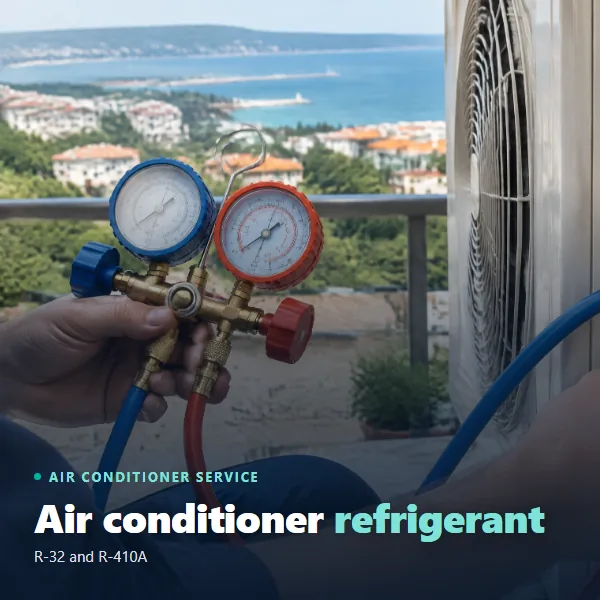
How to check: traces of oil on the connections at the indoor or outdoor unit can be a sign of a slow leak. Then you need a diagnosis, not just a top-up. What a refrigerant leak means is covered in air conditioner refrigerant.
3. A drain without a slope
The indoor unit produces condensate, and it has to drain on its own. The hose is laid with a constant downward slope, with no sags and no upward sections. A sagging hose holds water, and if it clogs, the condensate can run down the wall.
Where a slope cannot be made, the solution is a condensate pump.
How to check: in cooling mode water should drip from the outer end of the drain. If it drips nowhere and the indoor unit has run for an hour, the water is going somewhere else. What to check when water drips in the room is covered in air conditioner dripping water.
4. The wrong place for the indoor unit
A wall unit needs free space above it and at the sides to draw in air. The exact distance is in the model’s manual. Pressed against a curtain rail or set in a niche, the air conditioner recirculates its own air.
The airflow direction matters too. A unit directly above the bed or facing the workplace makes the room uncomfortable, people switch it off and then think the unit is weak.
How to check: stand where you usually sit. If the airflow falls directly on you, the place was chosen for the convenience of the installation.
5. The wrong place for the outdoor unit
The outdoor unit needs free air. A closed niche, a solid decorative grille or two units face to face on a narrow balcony all lead to the same thing: the unit draws in its own air and efficiency falls. In winter 30 cm of free space around the unit is needed too. What else is different when an air conditioner is installed in cold weather, see air conditioner installation in winter.
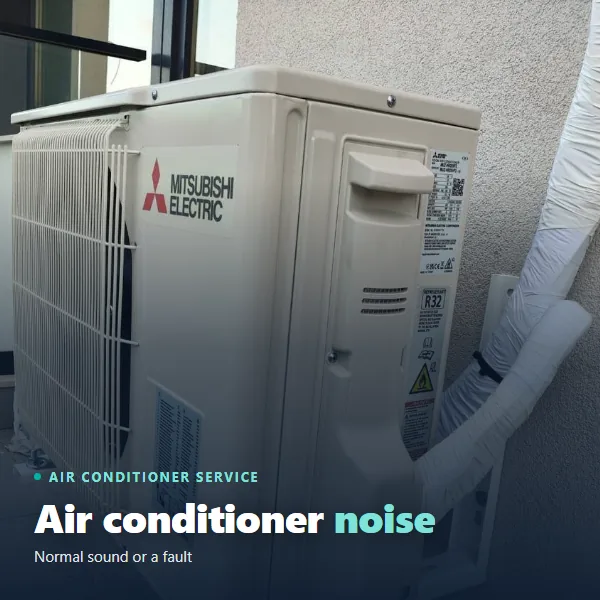
Brackets are chosen by weight and anchors by the wall. Vibration is dealt with during installation using anti-vibration pads. Which air conditioner sounds are normal and which are not, see air conditioner noise.
6. A pipe run that is too long or kinked
Every manufacturer sets a maximum pipe length and a maximum height difference between the two units. Above a certain length, refrigerant is added according to the manual. A kinked pipe narrows the cross-section and restricts the flow.
How to check: if your pipe run is long, ask whether an extra charge is needed according to the model’s manual and whether it was done.
7. Insulation on one pipe only
The two copper pipes between the units are insulated separately and along their whole length, including the sections inside the wall. An uninsulated pipe condenses, and water drips where you do not expect it.
8. Power from an overloaded line
Connected to a socket that already feeds a boiler or a kitchen, the air conditioner runs until two peaks coincide. Check the line and the circuit breaker before installation.
What to ask before installation
Three questions are enough: is vacuuming included, how many metres of pipe are in the price, and is there a guarantee on the installation itself. What the price covers is set out in standard air conditioner installation.
Standard installation with us is 150 € up to 14,000 BTU and 180 € from 16,000 to 24,000 BTU for a unit bought from us (180 € and 220 € for your own unit), with a pipe run up to 3 m, and the installation guarantee is 1 year. All prices are on the page air conditioner installation in Varna. The survey is free in Varna and up to 200 km.
If you are comparing quotes, see also the guide to cheap air conditioners with installation. If you are still choosing the capacity, start with how many BTU you need.
If the installation is already done
The drain slope, pipe insulation and anti-vibration pads can usually be fixed easily. Skipped vacuuming is solved by draining, vacuuming and charging again.
If the unit cools less well than in its first year or there are traces of oil on the connections, book a diagnosis. Annual servicing helps catch these things in time.
Frequently asked questions
Is vacuuming mandatory when installing an air conditioner?
Yes. Without it, air and moisture stay in the system and strain the compressor. Purging with refrigerant does not replace it.
How many metres of pipe are included in standard installation?
With us it is 3 m for a household air conditioner. It differs between companies, so compare prices only at the same length.
How do I know the installation was done correctly?
Check that the drain drips in cooling mode, that both pipes are insulated along their whole length, that there are no traces of oil on the connections and that the outdoor unit has free space.
Can an air conditioner be installed without a vacuum pump?
It can, but it should not be. The unit will start, but air and moisture strain the compressor.
How high should the indoor unit be?
There must be free space above the unit so it can draw in air. The exact distance is in the model’s manual.
Is there a guarantee on the installation?
Yes. Our installation has a 1-year guarantee when the unit is bought from us.